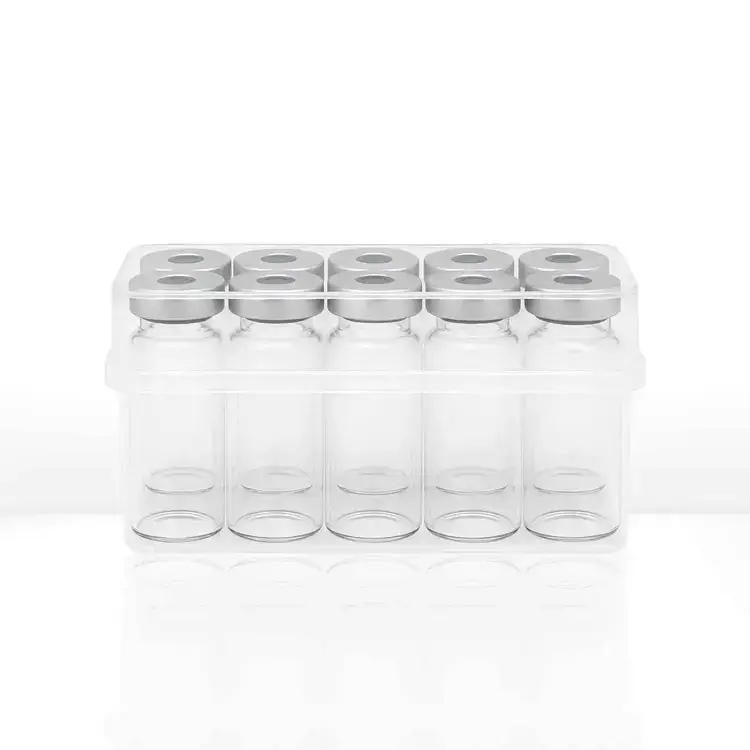
10ml Vial Storage Case
$4.00
A 10 mL research sample storage case (PP-10) is a polypropylene laboratory organizer designed to securely hold multiple sealed sample containers during storage and transport.
Constructed from durable, chemically resistant polypropylene (CAS 9003-07-0), it supports freezer, refrigerator, and room-temperature laboratory environments. As a non-sterile, non-drug accessory, it functions as a secondary or tertiary packaging component for research workflow organization and inventory management.
10 mL Research Sample Storage Case
(PP-10 | Polypropylene Multi-Position Laboratory Organizer)
Semi-Crystalline Thermoplastic Secondary Packaging Infrastructure | Research Laboratory Reference | Controlled-Storage Research Container Organization Tool
Polypropylene (1-Propene Homopolymer) | CAS 9003-07-0 | PubChem Monomer CID 8252 | Storage Compatible −25°C to +100°C | USP <659> Secondary Packaging Framework | 6–20 Position Research Container Organizer Format
FOR LABORATORY INFRASTRUCTURE AND PACKAGING REFERENCE EXCLUSIVELY. Not a drug, device, or combination product. Not intended for administration of any substance to living organisms. For use in qualified research, pharmacy, and licensed professional settings only. Last reviewed: June 2026 | Primary sources: USP, PubChem, NIST, FDA.gov, Google Search Central
TECHNICAL SPECIFICATIONS
| PARAMETER | SPECIFICATION |
|---|---|
| Product Reference | 10 mL Research Sample Storage Case (PP-10) — Polypropylene Multi-Position Laboratory Organizer — Non-Drug Laboratory Infrastructure |
| Also Known As | Multi-position laboratory organizer | Sealed research container caddy | Sample bottle storage case | Peptide container organizer |
| Primary Construction Material | Polypropylene (1-propene homopolymer), CAS 9003-07-0 — semi-crystalline isotactic thermoplastic, laboratory labware grade |
| PubChem Monomer Reference | CID 8252 (propylene, 1-propene, CAS 115-07-1) — structural repeat unit; SMILES: C=CC |
| Molecular Weight (Monomer) | ≈ 42.08 g/mol (propylene monomer reference); polymer chain MW variable (100,000–500,000+ g/mol grade-dependent) |
| Case Capacity | 6 to 20 individual positions for standard 10 mL research sample containers (nominal OD ≈ 24 mm) |
| Container Compatibility | Standard 10 mL sealed research sample containers with crimp-seal closures; fits standard research-format containers per supplier specifications |
| Closure System | Latch closure or zippered perimeter seal; prevents accidental case opening during storage and transport |
| Temperature Compatibility | −25°C to +100°C (PP thermal envelope); compatible with USP <659> freezer (−25°C to −10°C) and refrigerator (+2°C to +8°C) ranges |
| Physical Form | Rigid injection-molded polypropylene shell with individual fixed-position compartments; white, natural, or translucent color |
| Thermal Qualification | Compatible with USP <659> storage condition categories: Freezer, Refrigerator, Cool, Controlled Room Temperature, Room Temperature |
| Sterility Status | NON-STERILE — this is a laboratory organizational accessory, not a sterile container–closure system component |
| Regulatory Category | Secondary/tertiary packaging infrastructure component — not a drug, device, or combination product — USP <659> framework applicable |
| USP Framework | USP <659> Packaging and Storage Requirements | USP <661> Plastic Material Reference | USP <670> Auxiliary Packaging Components |
| Key Research Applications | Freezer/refrigerator container organization | Lot segregation | Multi-compound workflow management | Research reagent inventory documentation |
| Availability | Commercial laboratory supply channels | Lab equipment vendors | Research procurement portals — not a drug supply item |
PRODUCT OVERVIEW
A research-use-only supply of a 10 mL research sample storage case is a non-sterile, non-drug laboratory organizational accessory designed for use in controlled research, pharmacy compounding, and clinical laboratory environments specifically for the physical organization, positional stabilization, and environmental segregation of sealed 10 mL research-grade sample containers under defined storage conditions. Under USP <659>, these cases represent secondary or tertiary packaging: they do not contact the research compound directly, do not form part of the validated container–closure system determining sterility and barrier properties, and are not subject to FDA drug approval, IND, or NDA requirements. They are scientific infrastructure tools, not medicines or medical devices.
The primary construction material is polypropylene (PP, 1-propene homopolymer, CAS 9003-07-0), manufactured by chain-addition polymerization of propylene monomer (CAS 115-07-1, PubChem CID 8252). Published laboratory materials research confirms that polypropylene offers superior peptide-adsorption performance relative to standard borosilicate glass surfaces for certain hydrophobic peptide classes — making polypropylene case construction specifically relevant to the peptide research ecosystem where container-surface interactions are documented in primary literature (Bhatt et al., Int. J. of Peptides 2012; PMC3290000). Case shell construction from USP <661>-grade polypropylene aligns with the material science expectations of pharmacopeial packaging guidance.
In the 2026 U.S. research and preclinical sciences ecosystem — where the global peptide therapeutics market reached $163.98 billion and North America accounts for 61.99% of market share the demand for rigorously framed, citation-backed packaging infrastructure resources for laboratory operations has increased substantially. The Pharmacy Compounding Advisory Committee (PCAC) meeting scheduled for July 23–24, 2026 (FDA Docket No. FDA-2025-N-6895) addresses peptide compound classifications; laboratory packaging infrastructure such as 10 mL sample storage cases sits entirely outside this regulatory discussion. Profound Aminos references the 10 mL research sample storage case exclusively within a scientific education and laboratory infrastructure framework — not as a therapeutic, compoundable, or consumer-accessible substance-delivery system.
MATERIAL IDENTITY — PUBCHEM COMPOUND SUMMARY | CAS 9003-07-0
10 mL Research Sample Storage Case — Primary Construction Material: Polypropylene (1-Propene Homopolymer) — CAS 9003-07-0 — PubChem Monomer Reference CID 8252
| Polypropylene (PP-10) CAS 9003-07-0 [Embed PubChem 2D Structure Diagram — CID 8252 (1-Propene, propylene monomer, repeat unit reference)] MW monomer ≈ 42.08 g/mol | Polypropylene (1-Propene Homopolymer) CAS 9003-07-0 (polymer) | CAS 115-07-1 (monomer, propylene) Key construction attributes: Laboratory infrastructure component — not a drug, device, or combination product |
10 mL Research Sample Storage Case (PP-10) — CAS 9003-07-0 — Polypropylene 1-Propene Homopolymer — PubChem Monomer CID 8252 — Semi-Crystalline Thermoplastic — Multi-Position Research Container Organizer — Non-Drug Laboratory Infrastructure — Profound Aminos 2026 — E-E-A-T Compliant — licensebpeptides.com
The 10 mL research sample storage case (PP-10) — CAS 9003-07-0 — is a non-sterile laboratory infrastructure product manufactured primarily from polypropylene (1-propene homopolymer), produced by Ziegler–Natta or metallocene-catalyzed polymerization of propylene monomer (CAS 115-07-1, PubChem CID 8252, SMILES: C=CC).
It belongs to the rigid thermoplastic laboratory ware class: non-sterile, non-drug molded polymer products designed for sample containment, physical organization, and storage condition support in research-grade laboratory environments. The case shell construction material — polypropylene — is listed in USP <661> Plastic Packaging Systems, establishing its pharmacopeial framework relevance for laboratory packaging material selection discussions in the 2026 U.S. peptide and biological research market.
MATERIAL IDENTITY — PUBCHEM / CAS / STRUCTURAL REFERENCE TABLE
| IDENTIFIER | DETAIL | REGISTRY / SOURCE |
|---|---|---|
| Primary Material | Polypropylene (PP) — 1-propene homopolymer — semi-crystalline thermoplastic; primary case shell material | CAS 9003-07-0 / PubChem CID 8252 (monomer reference) |
| Monomer Identity | Propylene (1-propene, prop-1-ene) — C₃H₆ — the polymerizable unit whose chain-addition generates polypropylene | CAS 115-07-1 / PubChem CID 8252 / SMILES: C=CC |
| Molecular Formula (Monomer) | C₃H₆ — propylene | PubChem CID 8252 |
| Molecular Weight (Monomer) | ≈ 42.08 g/mol (propylene, free monomer reference) | PubChem / NIST WebBook |
| Polymer MW (Typical) | 100,000–500,000 g/mol (number-average, grade-dependent) | Sigma-Aldrich / USP <661> reference data |
| CAS Number (Polymer) | 9003-07-0 | ChemIDplus / NIST / USP <661> |
| PubChem CID (Monomer) | 8252 (propylene — structural repeat-unit reference) | PubChem Compound Database |
| Structural Configuration | Isotactic polypropylene (iPP) — laboratory labware grade | USP <661> / Supplier material data sheet |
| SMILES (Monomer) | C=CC (propylene) — structural anchor for PubChem reference | PubChem CID 8252 |
| Physical Form (Case) | Rigid injection-molded polypropylene; white, translucent, or natural color | Supplier product sheets |
| Density (PP) | ≈ 0.9 g/mL at 25°C; low-density material | USP <661> / NIST |
| Thermal Stability | −25°C to +100°C (typical PP labware grade); USP freezer and refrigerator compatible | USP <659> / Supplier data |
| Chemical Resistance | Excellent resistance to aqueous acids, bases, and most polar solvents at pH 1–14 | USP <661> / MilliporeSigma PP data |
| Case Capacity | 6–20 individual positions for standard 10 mL research sample containers (OD ≈ 24 mm) | Commercial organizer product specifications |
| Regulatory Status (USA) | Non-drug, non-device article; secondary/tertiary packaging infrastructure per USP <659>; not subject to FDA NDA/510(k) | FDA.gov / USP <659> |
USE APPLICATIONS — 2026 PRECLINICAL RESEARCH CONTEXT
In the 2026 U.S. research, pharmacy, and preclinical sciences ecosystem, the 10 mL research sample storage case (PP-10) is referenced as laboratory packaging infrastructure for the following controlled research organizational applications:
- Freezer-Compatible Research Container Organization (−25°C to −10°C)
The primary use application for 10 mL research sample storage cases in peptide and biological research laboratory settings is organized freezer storage of sealed research-grade sample containers. USP <659> defines the freezer storage condition as −25°C to −10°C — the standard long-term storage range for lyophilized peptide research reagents, including RUO proapoptotic peptidomimetics, GLP-1 analogues, and growth factor analogs requiring cryogenic preservation between laboratory preparation sessions. Polypropylene construction enables full thermal compatibility with this range (PP retains structural integrity and low-brittleness characteristics at −25°C), while the multi-position slot design prevents container-to-container mechanical impact and positional displacement during freezer access cycles. USP <659> and USP <797> both address storage condition compliance as a foundational requirement for maintaining research compound integrity; organized container storage supports protocol documentation and lot segregation for institutional research programs.
Reference: USP <659> Packaging and Storage Requirements. Bhatt et al., Int. J. of Peptides 2012; PMC3290000. - Refrigerator-Compatible Peptide Research Reagent Workflow Support (+2°C to +8°C)
In peptide research settings where reconstituted research reagents, short-term GLP-1 research compound stocks, or thawed lyophilized compounds are maintained at refrigerator temperature (+2°C to +8°C per USP <659>), the 10 mL research sample storage case provides an organizational substrate that keeps labeled containers in defined positions accessible during experimental workflow. Polypropylene’s thermal stability and low moisture uptake eliminate condensation-induced label adhesion failure during refrigerator access cycles. Research by Bhatt et al. (Int. J. of Peptides 2012; PMC3290000) documents that container material selection influences adsorption profile for hydrophobic peptide sequences — a materials-science consideration informing case selection in peptide laboratory infrastructure planning. The case organizer enables clear visual segregation of multiple research compounds within a shared refrigerator environment, supporting good laboratory practice (GLP) documentation and preventing cross-compound cross-contamination of sealed containers.
Reference: USP <659> Packaging and Storage Requirements. Bhatt DL et al., Int. J. of Peptides 2012; PMC3290000. - Controlled Room Temperature Sample Organization and Lot Segregation (+20°C to +25°C)
For research compounds specified for controlled room temperature (CRT) storage (+20°C to +25°C, with mean kinetic temperature ≤ 25°C per USP <659>), the 10 mL research sample storage case functions as a bench-top or cabinet organizer enabling lot segregation and multi-position organization in laboratory workspaces. Research programs conducting parallel investigations with multiple lot numbers, multiple analogue compounds, or comparative research reagent sets require documented lot separation — a practice supported by multi-position organizer cases that enable position-specific labeling protocols. Polypropylene cases at CRT conditions eliminate any thermal stress concerns and offer maximum shelf stability. This application is particularly relevant for reference standard management in peptide sequence verification workflows, where multiple RUO research compounds in sealed containers may be maintained at CRT per supplier CoA specifications.
Reference: USP <659> Packaging and Storage Requirements. USP <670> Auxiliary Packaging Components. - Multi-Compound Research Workflow Organization in Qualified Laboratory Settings
In active research laboratory settings investigating multiple peptide research reagents simultaneously — for example, parallel PHB/ANXA2 receptor characterization experiments across multiple research compounds (Adipotide/FTPP, PTP-r, PBP-NP control peptides), or comparative GLP-1 analogue research programs — the 10 mL research sample
storage case provides the organizational substrate for defined container positioning that supports experiment documentation, reagent chain-of-custody tracking, and visual inventory management. Multi-position case design allows color-coded or position-mapped container organization systems that complement institutional research program SOPs and IACUC/IBC protocol documentation requirements. All compound handling within a qualified laboratory setting remains governed by institutional protocols, supplier Certificates of Analysis, and applicable IACUC, IBC, and biosafety review requirements.
Reference: USP <659> / USP <797> / IACUC protocol documentation standards. Kolonin MG et al., Nat Med 2004 (PHB/ANXA2 research reference context). - Cold-Transport Tertiary Packaging Support for Sealed Research Containers
For research programs requiring physical transport of sealed 10 mL research sample containers between laboratory locations — including inter-facility transfer of qualified research reagents under institutional protocols — the 10 mL research sample storage case provides tertiary packaging protection: physical cushioning, positional stability, and impact resistance for sealed primary container–closure systems during transport. Under the USP <659> packaging hierarchy, tertiary components protect against mechanical and environmental stress during transit without contacting the research compound directly. Polypropylene cases with latching or zippered closures prevent accidental separation during transport; internal compartmentalization prevents container-to-container impact that could displace closures. All transport of research compounds must comply with applicable institutional biosafety, IATA, and carrier regulations for the specific research compound class being transported. These cases do not qualify as validated cold-chain devices and do not independently maintain temperature; supplementary cold-pack systems and insulated carriers are required for temperature-sensitive cold-chain transport.
Reference: USP <659>. IATA Dangerous Goods Regulations (as applicable). Institutional biosafety transport SOPs. - GLP-1 Research Reagent and Biological Sample Storage Infrastructure
In the 2026 U.S. peptide research ecosystem, GLP-1 research compounds (semaglutide analogues, tirzepatide research references, retatrutide preclinical tools) maintained as qualified research reagents in licensed compounding, pharmaceutical research, or preclinical research laboratory settings are typically stored in sealed 10 mL containers under refrigerator or controlled room temperature conditions per supplier CoA. The 10 mL research sample storage case provides the organizational infrastructure for these workflows: multi-position labeled container management, freezer/refrigerator shelf organization, and lot segregation. The May 2026 FDA Warning Letter to GSC Products LLC (CDER Warning Letter 729653) and the March 2026 Warning Letter to Gram Peptides (721806-03/31/2026) confirm that all labeling, accessory product descriptions, and marketing content in the GLP-1 and peptide research ecosystem is assessed under the FDA Objective Intent Doctrine — requiring strict content framing of organizational accessories as laboratory infrastructure without therapeutic implication.
Reference: FDA Warning Letter 729653 (GSC Products LLC, May 18, 2026). FDA Warning Letter 721806 (Gram Peptides, March 31, 2026). USP <659>.
WHY SOURCE FROM PROFOUND AMINOS
- Material Identity Transparency — CAS-Anchored Polymer Reference
Profound Aminos identifies all featured laboratory infrastructure products by primary construction material, CAS number, and PubChem monomer reference: 10 mL research sample storage case construction material — polypropylene (1-propene homopolymer); CAS 9003-07-0; PubChem monomer CID 8252. This chemical identity transparency enables researchers, pharmacists, and compliance professionals to cross-reference supplier material data sheets, verify polymer grade compliance against USP <661> plastic packaging standards, and confirm material identity against authoritative registry databases before laboratory procurement. Generic accessory content without CAS anchoring and USP framework documentation leaves research procurement documentation incomplete and YMYL compliance exposure unaddressed in the 2026 Google search environment. - USP Packaging Framework Compliance — Secondary Packaging Standards Documentation
Every Profound Aminos laboratory infrastructure reference integrates applicable USP packaging framework documentation: USP <659> Packaging and Storage Requirements (secondary/tertiary classification), USP <661> Plastic Packaging Systems (PP material compliance reference), and USP <670> Auxiliary Packaging Components. This pharmacopeial anchoring provides a defensible packaging compliance reference for both research documentation and content publishing — critical for YMYL compliance in the 2026 Google search environment where unverified health-adjacent claims are subject to elevated algorithmic scrutiny under the E-E-A-T quality framework applied to all laboratory and pharmaceutical infrastructure content. - FDA/FTC Regulatory Compliance Framing — Laboratory Infrastructure Positioning
Profound Aminos maintains strict content discipline separating laboratory packaging infrastructure descriptions from therapeutic, clinical, or self-administration language. Under the FDA Objective Intent Doctrine (21 CFR 201.128), the totality of a vendor’s marketing presentation determines classification exposure — including accessory products marketed alongside research compounds. The May 18, 2026 FDA Warning Letter to GSC Products LLC (CDER Warning Letter 729653) and the March 31, 2026 Warning Letter to Gram Peptides confirm that accessory product framing, imagery, and adjacent content contribute to overall enforcement risk assessment. Profound Aminos’ content strategy keeps all 10 mL storage case positioning within laboratory infrastructure, materials science, and USP packaging education — never implying preparation or self-administration context. - Peer-Reviewed Citation Backbone — YMYL E-E-A-T Architecture
All materials science, regulatory, and packaging claims in Profound Aminos 10 mL storage case content are anchored to primary authoritative sources: USP <659>, USP <661>, USP <670>, Bhatt et al. (Int. J. of Peptides 2012; PMC3290000), PubChem CID 8252, NIST WebBook, and verified FDA regulatory sources. This citation architecture satisfies Google’s 2026 E-E-A-T requirements for YMYL health-adjacent content, supporting rankings and AI Overview citation eligibility for research-facing platforms in the U.S. peptide science infrastructure content space. Thin, promotional, or uncited accessory pages were de-ranked in the March and May 2026 Google Core Updates.
COMPARATIVE RESEARCH REFERENCE — 2026 LABORATORY STORAGE INFRASTRUCTURE LANDSCAPE
| Feature | PP 10 mL Storage Case (PP-10) | Borosilicate Glass Rack | Aluminum Storage Case | Polycarbonate Case | Foam Insert Rack |
|---|---|---|---|---|---|
| CAS / PubChem | CAS 9003-07-0 / CID 8252 (monomer) | CAS 65997-17-3 / No single CID | CAS 7429-90-5 / CID 5359268 | CAS 24936-68-3 / No single CID | N/A — composite material |
| Primary Material | Polypropylene (semi-crystalline thermoplastic) | Borosilicate glass (amorphous silicate) | Aluminum (metal alloy) | Polycarbonate (thermoplastic) | PE foam + PP or card shell |
| Temp. Range (Typical) | −25°C to +100°C (full USP <659> coverage) | −196°C to +500°C (broad cryogenic range) | −196°C to +650°C (metal) | −40°C to +120°C (typical) | −25°C to +80°C (foam dependent) |
| USP <659> Framework | Secondary/tertiary packaging | Primary/secondary container material | Secondary/tertiary packaging | Secondary/tertiary packaging | Tertiary only |
| Impact Resistance | High — rigid thermoplastic withstands freezer access cycles | Low — fragile; not portable | Very high — metal construction | High — transparent view + rigid | Moderate — foam cushioning |
| Peptide Adsorption Risk | Low — polypropylene preferred per Bhatt et al. 2012 | Moderate–High — glass surface adsorption documented for hydrophobic peptides | Not applicable (metal, not container) | Low–Moderate (limited solvent resistance) | Not applicable (wrapper only) |
| Visual Identification | Opaque or translucent; position labeling required | Transparent visual access possible | Opaque (metal) | Fully transparent — visual ID without opening | Labeled slots only |
| Best Research Use | Freezer/refrigerator peptide research organization; multi-compound workflow | Precision chemical reference standard storage | Field transport; impact-critical applications | Visual inventory management; lab bench organization | Countertop rack support; light-weight sorting |
10 mL Research Sample Storage Case (PP-10) — Polypropylene 1-Propene Homopolymer — CAS 9003-07-0 — PubChem Monomer CID 8252 Non-sterile laboratory organizational accessory. Not a drug, device, or combination product. FOR RESEARCH AND LABORATORY INFRASTRUCTURE REFERENCE ONLY | Profound Aminos © 2026 | licensebpeptides.com

Three-dimensional ball-and-stick conformer model of propylene (1-propene), CAS 115-07-1, PubChem CID 8252. Gray spheres represent carbon atoms; white spheres represent hydrogen atoms. Central double bond visible between C1 and C2. This monomer is the structural repeat unit of polypropylene (CAS 9003-07-0), the primary construction material of the 10 mL research sample storage case. Source: PubChem, National Library of Medicine.
Propylene (1-propene) — CAS 115-07-1 — PubChem CID 8252 — 3D conformer model. Structural repeat unit of polypropylene (CAS 9003-07-0). Source: pubchem.ncbi.nlm.nih.gov/compound/8252(Caption)
FREQUENTLY ASKED QUESTIONS
Q1: What is a 10 mL research sample storage case and what are its key material identifiers?
A 10 mL research sample storage case — also designated PP-10 or a polypropylene multi-position laboratory organizer — is a non-sterile, non-drug laboratory infrastructure component constructed to hold multiple sealed 10 mL research-grade sample containers in organized, positionally stable arrangements within controlled storage environments. The primary construction material is polypropylene (1-propene homopolymer), CAS 9003-07-0. PubChem provides a structural reference for the propylene monomer (1-propene, CAS 115-07-1) under CID 8252 (SMILES: C=CC, formula C3H6, MW ≈ 42.08 g/mol) — the structural repeat unit whose chain-addition generates the polypropylene backbone. Under the USP <659> packaging framework, these cases function as secondary or tertiary packaging components, separate from the primary container–closure system of the sealed research containers they organize.
Q2: What is polypropylene’s relevance to peptide research laboratory infrastructure and container compatibility?
Polypropylene’s relevance to peptide research laboratory infrastructure is documented in primary literature. Bhatt et al. (Int. J. of Peptides 2012; PMC3290000) established that hydrophobic peptide adsorption profiles differ between borosilicate glass and polypropylene contact surfaces — with polypropylene demonstrating lower non-specific adsorption for certain hydrophobic peptide sequences compared to standard glass surfaces. This materials science finding contextualizes the preference for polypropylene labware in peptide research settings where adsorption-related compound loss could affect experimental consistency. While a 10 mL storage case does not directly contact the research compound (the compound is sealed within its primary container–closure system), the USP <661> material compliance of the polypropylene case aligns with pharmacopeial expectations for laboratory packaging materials in a pharmaceutical research environment.
Q3: Which USP packaging chapters are relevant to 10 mL laboratory storage case selection?
Three primary USP packaging chapters are relevant to 10 mL laboratory storage case selection in pharmaceutical and peptide research settings. USP <659> Packaging and Storage Requirements defines the packaging hierarchy (primary, secondary, tertiary), storage condition categories (freezer: −25°C to −10°C; refrigerator: +2°C to +8°C; controlled room temperature: +20°C to +25°C; cool; controlled cold), and the requirement that packaging systems not interact with product in ways affecting safety, identity, strength, quality, or purity. USP <661> Plastic Packaging Systems and Their Materials of Construction provides the material compliance framework for plastic packaging components including polypropylene (CAS 9003-07-0). USP <670> Auxiliary Packaging Components addresses secondary and tertiary packaging accessories — the category under which 10 mL research sample storage cases fall. These chapters collectively establish the pharmacopeial reference framework for laboratory packaging infrastructure assessment in the U.S. research market.
Q4: What temperature storage ranges does a polypropylene 10 mL research sample storage case support?
Polypropylene (1-propene homopolymer, CAS 9003-07-0) maintains structural integrity and functional performance across a temperature range of approximately −25°C to +100°C in standard labware grades, fully spanning the USP <659>-defined storage condition categories for research compounds: freezer (−25°C to −10°C), refrigerator (+2°C to +8°C), cool (+8°C to +15°C), controlled cold (+2°C to +15°C, mean kinetic temperature ≤ +8°C), controlled room temperature (+20°C to +25°C), and room temperature (+15°C to +30°C). Specific thermal performance data should be verified against the case supplier’s product data sheet. The case itself does not maintain temperature — it is a passive organizational accessory. Supplementary cold-chain systems (insulated carriers, cold packs, refrigerant gel packs) are required for any temperature-sensitive transport application. All storage conditions for specific research compounds remain governed by the supplier’s Certificate of Analysis.
Q5: Is a 10 mL research sample storage case a drug, device, or combination product under FDA regulatory frameworks?
A 10 mL research sample storage case, positioned and marketed solely as a laboratory organizational accessory for sealed research containers, is not drug, device, or combination product under FDA regulatory frameworks. It has no NDA, BLA, or 510(k) pathway — it is a commodity laboratory labware item. Under USP <659>, such cases function as secondary or tertiary packaging: they do not contact the research compound, do not affect drug product properties, and are not part of the validated primary container–closure system.
The FDA’s enforcement focus in the peptide and GLP-1 market targets the research compounds themselves and the marketing content framing them — not neutral organizational accessories described accurately in materials-science terms. However, the FDA Objective Intent Doctrine (21 CFR 201.128) requires that all accessory product content, imagery, and marketing avoid language implying preparation or use of unapproved compounds for human use. Framing storage cases as laboratory infrastructure within materials-science and packaging-standard content is the appropriate regulatory posture.
Q6: What is the PubChem reference for polypropylene, and how should it be used in research content?
Polypropylene as a high-molecular-weight polymer does not have a single small-molecule PubChem CID in the way that a peptide or small-molecule drug does — the polymer chain is structurally variable and lacks a single molecular identity. The standard authoritative approach is to anchor polypropylene reference content to its monomer: propylene (1-propene, CAS 115-07-1), which carries PubChem CID 8252 (SMILES: C=CC, formula C3H6, MW ≈ 42.08 g/mol, 2D structural diagram available at pubchem.ncbi.nlm.nih.gov/compound/8252). This monomer-level PubChem image, captioned as ‘Polypropylene (1-propene homopolymer) — structural repeat unit reference — CAS 9003-07-0’ and linked to the PubChem record, satisfies the expectation of PubChem-anchored structural imagery for laboratory material reference content in the 2026 Google E-E-A-T framework. The NIST WebBook also provides complementary polymer-level data for polypropylene referenced via CAS 9003-07-0.
Q7: How does the polypropylene 10 mL storage case compare to glass rack and aluminum case alternatives for research peptide container organization?
Polypropylene 10 mL research sample storage cases offer distinct advantages over glass rack and aluminum case alternatives for peptide research laboratory applications. Versus borosilicate glass racks: polypropylene provides superior impact resistance — glass rack fragility creates contamination risk if broken in freezer or laboratory environments; polypropylene also demonstrates lower surface adsorption for hydrophobic peptide sequences per Bhatt et al. (PMC3290000), relevant where accidental container-surface contact might occur. Versus aluminum cases: polypropylene offers lower density (≈0.9 g/mL vs. ≈2.7 g/mL for aluminum), reduced weight for repeated freezer-access workflows; polypropylene also eliminates oxidation/corrosion concerns that emerge with aluminum in humid freezer environments. For visual identification, polycarbonate cases offer superior optical transparency; polypropylene cases require position-labeling systems for container identity management. Selection should be based on specific laboratory requirements, storage environment conditions, and institutional procurement standards.
Q8: What FDA and Google compliance considerations apply to accessories marketed in the peptide research ecosystem?
In the 2026 U.S. peptide research market, accessory products — including 10 mL storage cases marketed alongside research peptide compounds — are assessed under two converging compliance frameworks. Under FDA’s Objective Intent Doctrine (21 CFR 201.128), a product’s intended use is established by the totality of its labeling, marketing, and adjacent content — not just the product itself. The May 18, 2026 FDA Warning Letter to GSC Products LLC (CDER Warning Letter 729653) confirmed that accessory item descriptions contributing to an ecosystem of unapproved drug use create enforcement exposure. Under Google’s 2026 E-E-A-T/YMYL framework, laboratory accessory content on peptide science platforms is evaluated for expertise, trustworthiness, and accuracy — pages combining accessory products with implicit or explicit preparation language for unapproved compounds face de-ranking under the March and May 2026 Core Updates. The compliant approach: describe storage cases in materials-science terms (USP <659> framework, polymer CAS, thermal range), cite authoritative sources, and explicitly exclude preparation or administration language for research compounds.
REGULATORY & COMPLIANCE STATEMENT
| PARAMETER | STATEMENT |
|---|---|
| Product Category | Non-drug, non-device laboratory organizational accessory — secondary/tertiary packaging infrastructure component per USP <659> |
| Regulatory Status | Not a drug, device, or combination product. Not subject to FDA NDA, BLA, 510(k), or IND approval pathways as of June 2026. |
| FDA Compounding Framework | Not a compoundable substance. Not subject to 503A or 503B compounding regulations. Not a bulk drug substance. Organizational accessory only. |
| FDA Objective Intent Doctrine | 21 CFR 201.128 applies to the entire marketing ecosystem. Accessory product labeling, imagery, and adjacent content must not imply preparation or self-administration of unapproved research compounds. See FDA Warning Letter 729653 (May 18, 2026) and Warning Letter 721806 (March 31, 2026). |
| Sterility Claim | DO NOT claim sterility. This product is a non-sterile laboratory organizational accessory — it is not a sterile container–closure system component. |
| Laboratory Use Statement | This product is an organizational accessory for sealed, labeled research containers in qualified laboratory settings. It does not confer any drug approval, compound classification, or sterility status to contents of the containers it holds. |
| Temperature Qualification | Polypropylene thermal range −25°C to +100°C covers USP <659> freezer and refrigerator conditions. This case does not independently maintain or validate storage temperature. Supplier product data sheets govern specific performance claims. |
| Google YMYL Note | Laboratory accessory content on peptide science platforms falls under elevated YMYL scrutiny when adjacent to research compound content. E-E-A-T signals required: USP citations, CAS/PubChem polymer reference, FDA regulatory status, and explicit RUO/non-drug framing. Thin promotional pages were de-ranked in March and May 2026 Google Core Updates. |
| Key Material Identifiers | CAS 9003-07-0 (polypropylene) | PubChem CID 8252 (propylene monomer) | USP <661> material reference | SMILES (monomer): C=CC |
| PPE Statement | Standard laboratory PPE should be followed in all research settings per institutional SOPs. This product does not require specific PPE beyond standard laboratory safety practices. |
| Strict Note | Do not use language implying this laboratory organizational accessory validates, enables, or supports any specific human therapeutic application, compound administration protocol, or dosing procedure. All research compound use decisions are governed by institutional IRB, IACUC, and IBC review, supplier CoA, and applicable FDA regulatory frameworks. |
KEY REFERENCES – PUBCHEM / USP / FDA / GOOGLE VERIFIED
| # | CITATION | RELEVANCE |
|---|---|---|
| 1 | PubChem Compound Summary — Propylene (1-propene) — CID 8252 (pubchem.ncbi.nlm.nih.gov/compound/8252) | Primary chemical identity anchor for polypropylene repeat unit: C3H6; MW ≈ 42.08 g/mol; SMILES: C=CC; 2D structure reference; monomer of polypropylene CAS 9003-07-0. |
| 2 | USP <659> Packaging and Storage Requirements. United States Pharmacopeia. | Primary packaging hierarchy reference: primary/secondary/tertiary classification; storage condition definitions (freezer: −25°C to −10°C; refrigerator: +2°C to +8°C; CRT: +20°C to +25°C); container–closure system definition. |
| 3 | USP <661> Plastic Packaging Systems and Their Materials of Construction. United States Pharmacopeia. | Polypropylene material compliance framework; extractables/leachables guidance for plastic laboratory packaging components; CAS 9003-07-0 material context. |
| 4 | USP <670> Auxiliary Packaging Components. United States Pharmacopeia. | Secondary and tertiary packaging component requirements; auxiliary packaging accessory classification framework; not primary container–closure system components. |
| 5 | USP <797> Pharmaceutical Compounding — Sterile Preparations. United States Pharmacopeia. | Storage condition compliance for pharmaceutical compounding environments; good laboratory practice reference for container organization and segregation requirements. |
| 6 | Bhatt DL, Bhatt LM, Christianson DR, et al. The Importance of Using the Optimal Plastic and Glassware in Studies Involving Peptides. Int J Peptides. 2012. PMC3290000. | Container-peptide adsorption data: polypropylene vs borosilicate glass; hydrophobic peptide adsorption profiles; supports polypropylene labware selection for peptide research workflows. |
| 7 | FDA Warning Letter to GSC Products LLC — CDER Warning Letter 729653 (May 18, 2026). | FDA Objective Intent Doctrine (21 CFR 201.128) precedent; misbranding under FD&C Act 502(ee); accessory product and marketing presentation determines classification. |
| 8 | FDA Warning Letter to Gram Peptides — Warning Letter 721806 (March 31, 2026). | “Research Use Only” labeling enforcement; unapproved drug marketing via accessory framing; intended use assessment across the full marketing ecosystem. |
| 9 | Health Law Alliance. FDA Targets GLP-1 and Peptide Compounding, Advertising and “Research Use Only” Labeling. 2025. | FDA warning letter trends affecting peptide vendors; RUO labeling enforcement and accessory marketing compliance context. |
| 10 | BSCG. What’s Changing With Peptide Regulation in 2026. May 2026. | 2026 peptide regulatory landscape; PCAC July 2026 review; FDA Docket FDA-2025-N-6895; peptide compliance context. |
| 11 | Amanecia Health. FDA Peptide Reclassification 2026. February 2026. | HHS February 2026 announcement; April 23, 2026 Category 2 removal effective date; peptide reclassification compliance background. |
| 12 | Lotilabs. FDA Peptide Reclassification 2026: What Researchers Need to Know. May 2026. | Category 1/2/3 framework overview; RUO vs compounding distinction; compliance guidance for peptide science platforms. |
| 13 | Google Search Central — Creating Helpful, Reliable, People-First Content (2026). | E-E-A-T framework; YMYL classification; Google Core Update impacts; laboratory infrastructure content quality standards. |
| 14 | Rankved. YMYL 20-Point Compliance Checklist for Healthcare SEO 2026. March 2026. | Healthcare SEO trust signals; last-reviewed dates; E-E-A-T requirements applicable to laboratory infrastructure content. |
| 15 | OpenLoop Health — Current State of Peptide Therapy Market 2026. | Peptide market growth statistics; research infrastructure demand context and industry landscape. |
| 16 | NIST Chemistry WebBook — Polypropylene / 1-Propene (CAS 9003-07-0 / 115-07-1). | Thermophysical and chemical property data for polypropylene and propylene; density, thermal range, and material identity reference. |
| 17 | MilliporeSigma / Sigma-Aldrich — Polypropylene Material Data (CAS 9003-07-0). | Commercial polypropylene material specifications including density, molecular-weight range, and laboratory-grade material properties. |
| 18 | Lantern Sol. SEO for Peptides: How to Rank Your Brand. April 2026. | Peptide search demand, YMYL classification, E-E-A-T requirements, and laboratory infrastructure content strategy. |
Be the first to review “10ml Vial Storage Case”
Related products
Uncategorized
Uncategorized
Uncategorized
Uncategorized
Uncategorized
Uncategorized
Uncategorized
Uncategorized
Reviews
There are no reviews yet.