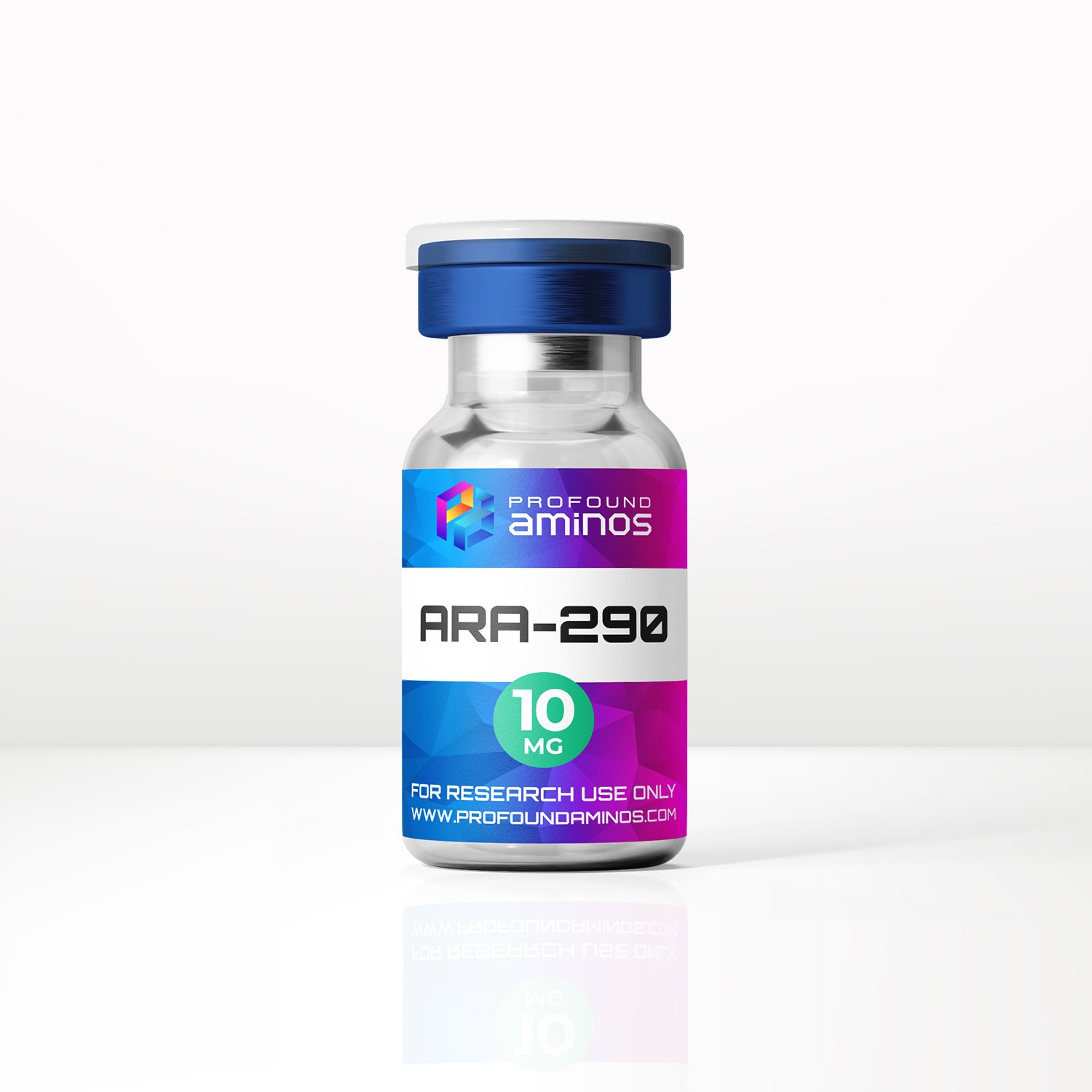
ARA-290 10mg
$59.00
ARA-290 (Cibinetide), also known as pHBSP, is an 11-amino acid synthetic EPO-derived research peptide designed for laboratory investigation of innate repair receptor (IRR) signalling and EPOR/CD131 receptor pharmacology.
Its selective non-erythropoietic profile supports tissue-protection and inflammatory pathway research without red blood cell stimulation. Supplied as a lyophilized 10 mg research reagent with COA verification. For laboratory research use only.
ARA-290 (Cibinetide) 10 mg
Innate Repair Receptor Research Peptide | Non-Erythropoietic EPO-Mimetic | RUO
11-Amino Acid | MW 1,257.3 g/mol | PubChem CID 91810664 | CAS 1208243-50-8 | Sequence: pGlu-Glu-Gln-Leu-Glu-Arg-Ala-Leu-Asn-Ser-Ser | Lyophilized | COA Per Batch
FOR RESEARCH USE ONLY. Not intended for consumption, parenteral administration, therapeutic, or diagnostic application of any kind. For laboratory and preclinical research exclusively.
TECHNICAL SPECIFICATIONS
| Technical Specifications | Data |
|---|---|
| Product Reference | ARA-290 (Cibinetide) 10 mg Innate Repair Receptor Research Peptide |
| Also Known As | Cibinetide | pHBSP | PH-BSP | Pyroglutamate Helix-B Surface Peptide | UEQLERALNSS |
| INN (Nonproprietary) | Cibinetide (USAN/INN — Araim Pharmaceuticals) |
| Chemical Class | Synthetic Linear Peptide — Non-Erythropoietic EPO-Mimetic IRR Agonist |
| PubChem CID | 91810664 |
| CAS Registry | 1208243-50-8 |
| DrugBank | DB13006 |
| ChEMBL | ChEMBL3545305 |
| Molecular Formula | CnnHnnNnnOnn |
| Molecular Weight | 1,257.3 g/mol |
| Sequence (1-letter) | ZEQLERALNSS (Z = pyroglutamate) |
| Sequence (3-letter) | pGlu-Glu-Gln-Leu-Glu-Arg-Ala-Leu-Asn-Ser-Ser |
| Amino Acid Count | 11 residues |
| Receptor Target | IRR: EPOR/CD131 (b-common receptor) heterodimer — Selective agonist |
| Erythropoietic Activity | None — selective non-haematopoietic IRR profile |
| Physical Format | Lyophilized Powder — Hermetically Sealed Container — 10 mg per batch |
| Analytical Purity | ≥99% (RP-HPLC verified) |
| Identity Confirmation | LC-MS — molecular weight and sequence verified per batch |
| Endotoxin Screening | <0.25 EU/mg (LAL method) |
| Reconstitution | Sterile aqueous buffer (PBS or bacteriostatic water) |
| Storage — Lyophilized | 2–8°C, desiccated, light-protected |
| Storage — Reconstituted | -20°C, single-use aliquots; avoid repeated freeze-thaw |
| Regulatory Class | Research Use Only (RUO) — Not for administration to living organisms |
| COA Availability | Per-batch COA downloadable from Profound Aminos COA portal |
Disclaimer : For Research Use Only (RUO). Not for human use.
PRODUCT OVERVIEW
Cibinetide (ARA-290) was rationally engineered by Araim Pharmaceuticals to isolate the tissue-protective signalling activity of erythropoietin while eliminating erythropoietic risk. The 11-residue sequence pGlu-Glu-Gln-Leu-Glu-Arg-Ala-Leu-Asn-Ser-Ser — corresponds to the helix-B surface domain of native EPO (residues 11-15 and 100-108 in tertiary proximity) that contacts the EPOR/CD131 heterodimer interface. The pyroglutamate residue at position 1 confers N-terminal cyclisation, providing resistance to aminopeptidase degradation. Arginine at position 6 (equivalent to EPO Arg-103) is critical for IRR receptor engagement and hydrogen-bonding within the CD131 binding groove.
In preclinical research models, IRR activation by cibinetide initiates a signalling cascade that diverges fundamentally from classical EPOR homodimer pathways. Rather than driving erythroid differentiation, IRR engagement activates JAK2 and downstream STAT5/MAPK cascades in non-haematopoietic tissues — resulting in inhibition of NF-kB p65 nuclear translocation, suppression of pro-inflammatory cytokine production (IL-6, TNF-a, IL-12), reduction in myeloid cell tissue infiltration, and upregulation of anti-apoptotic gene programs. This mechanistic profile positions ARA-290 as the primary IRR agonist research tool in 2026-era inflammation, neuroprotection, and tissue-integrity pathway research.
MOLECULAR STRUCTURE – PubChem CID 91810664

ARA-290 (Cibinetide) 11-Amino Acid Peptide Backbone & Mechanism Schematic | Sequence: pGlu-Glu-Gln-Leu-Glu-Arg-Ala-Leu-Asn-Ser-Ser | PubChem CID 91810664 | CnnHnnNnnOnn | MW 1,257.3 g/mol | CAS 1208243-50-8 | Teal residues = pharmacologically critical positions | Non-Erythropoietic IRR Agonist Research Reagent
ARA-290 (Cibinetide) – PubChem CID 91810664
Cibinetide has molecular formula C51H84N16O21 and molar mass 1,257.3 g/mol (PubChem CID 91810664; CAS 1208243-50-8; DrugBank DB13006; ChEMBL3545305; KEGG D11218). The 11-residue linear peptide sequence is pGlu-Glu-Gln-Leu-Glu-Arg-Ala-Leu-Asn-Ser-Ser (single-letter: ZEQLERALNSS). The N-terminal pyroglutamate (pGlu, Z) is formed by cyclisation of glutamine and provides proteolytic stability at the N-terminus.
Arginine at position 6 corresponding to Arg-103 of native human EPO — is essential for IRR receptor engagement at the EPOR/CD131 heterodimer binding interface. The peptide contains 16 nitrogen atoms reflecting the high arginine, glutamine, and asparagine content characteristic of receptor-binding peptides. Computed properties: 13 hydrogen-bond donors, 23 acceptors, topological polar surface area ~528 Å2, consistent with a hydrophilic, aqueous-soluble research peptide.
RESEARCH MECHANISM — 2026 LABORATORY APPLICATIONS
In 2026-era neuroimmunology, tissue-injury biology, and IRR pharmacology research, cibinetide is utilised to investigate the following mechanistic pathways:
- Selective IRR (EPOR/CD131) Receptor Agonism — Receptor Pharmacology Research
Investigating how ARA-290 selectively binds the EPOR/b-common receptor (CD131) heterodimer (the innate repair receptor, IRR) without engaging EPOR homodimers responsible for erythropoiesis. Research applications include IRR binding affinity quantification, competitive displacement assays using radiolabelled EPO analogues, receptor saturation studies in EPOR/CD131-expressing cell lines, and confirmation of non-erythropoietic receptor selectivity via haemoglobin and reticulocyte assays in preclinical rodent models. - NF-kB Inhibition & Pro-Inflammatory Cytokine Suppression Research
Studying how IRR activation by cibinetide inhibits nuclear translocation of NF-kB p65 subunit in myeloid cells and downstream transcription of pro-inflammatory mediators including IL-6, TNF-a, IL-12, nitric oxide synthase-2 (NOS2), and chemokine CXCL-10. Research endpoints include electrophoretic mobility shift assays (EMSA) for NF-kB DNA binding, ELISA cytokine quantification panels, flow cytometric myeloid cell activation markers, and NOS2 enzyme activity assays in LPS-stimulated macrophage and monocyte culture models. - JAK2-STAT5 / MAPK Downstream Signalling Pathway Research
Quantifying how IRR engagement by ARA-290 activates JAK2 kinase and downstream STAT5 phosphorylation in non-haematopoietic tissues — initiating anti-apoptotic gene programs and MAPK cascade activation. Research applications include Western blot phosphoprotein profiling (pJAK2, pSTAT5, pERK1/2), co-immunoprecipitation of EPOR/CD131 receptor complex, kinase inhibitor competition assays, and STAT5 transcriptional reporter systems in neuronal and endothelial cell models. - Nociceptive Pathway & TRPV1 Modulation Research
Investigating the anti-nociceptive mechanism of ARA-290 in preclinical neuropathy models — specifically its modulation of TRPV1 (transient receptor potential vanilloid 1) channel sensitisation in primary afferent neurons. Research applications include dorsal root ganglion (DRG) neuron calcium imaging, TRPV1 current recordings via patch-clamp electrophysiology, von Frey mechanical allodynia assays in rodent neuropathy models, and spinal cord microglial activation quantification (Iba-1 immunohistochemistry) based on published preclinical findings by Brines et al. - Tissue-Protective & Anti-Apoptotic Pathway Research
Studying how IRR-mediated signalling activates anti-apoptotic gene programs in tissues experiencing ischaemia-reperfusion injury, inflammatory stress, or mechanical trauma. Research applications include caspase-3/7 activity assays, TUNEL-based apoptosis quantification, mitochondrial membrane potential measurement (JC-1 assay), ATP-level bioluminescence assays in cibinetide-treated human islet culture models (referenced from Watanabe et al., Transplantation 2016), and endothelial barrier integrity measurement in transwell permeability assays. - Innate Immune Modulation & Myeloid Cell Infiltration Research
Investigating how cibinetide reduces myeloid cell tissue infiltration and inflammatory mediator production in experimental colitis, myocardial injury, and neural trauma models. Based on published findings from a 2017 Scientific Reports colitis study demonstrating CD131- and JAK2-dependent reduction in myeloid infiltration and NF-kB activation, research applications include histological quantification of tissue-resident macrophage and neutrophil counts, myeloperoxidase activity assays, and multiplex cytokine panel analysis in cibinetide-treated inflammatory disease models. - Cardiovascular Ageing & Cardiac Function Preservation Research
Studying how chronic ARA-290 exposure modulates age-related cardiac inflammatory decline, based on a 2023 randomised controlled trial in Fischer 344 × Brown Norway ageing rats (PMC9889362) demonstrating attenuation of leukocyte infiltration, reduction in NF-kB activation, enhanced cardiomyocyte autophagy, and preserved left-ventricular ejection fraction. Research applications include echocardiographic functional assessment in aged rodent models, cardiomyocyte autophagy flux measurement (LC3B-II/LC3B-I ratio), mitochondrial permeability transition pore (mPTP) assays, and cardiac cytokine profiling. - Pancreatic Islet Transplantation Protection Research
Investigating IRR-mediated protection of transplanted pancreatic islets from inflammatory macrophage activation and alloimmune rejection — based on published preclinical data (Watanabe et al. 2016, Yao et al. 2020) showing cibinetide maintained ATP levels,bsuppressed caspase 3/7 activity in human islets under cytokine stress, improved engraftment (higher human insulin in recipient liver at day 6), and reduced IL-1 and IL-6 mRNA expression. Research endpoints include islet viability staining, insulin secretion ELISA, allo-reactive IFN-g ELISpot assays, and islet allograft survival curves in rodent transplant models.
WHY SOURCE FROM PROFOUND AMINOS
- Sequence-Confirmed Identity via LC-MS
ARA-290 is an 11-residue peptide. Standard purity testing confirms what percentage of a container is the target compound it does not confirm the correct amino acid sequence. For a peptide with a N-terminal pyroglutamate (which can artefactually form from glutamine during synthesis), sequence confirmation is not optional. Profound Aminos verifies every batch via LC-MS molecular weight confirmation (expected [M+H]+ 1258.3) and peptide sequence mapping. Both RP-HPLC purity (³99%) and LC-MS identity are reported on every per-batch COA. Purity without sequence identity is an incomplete quality standard. - Lyophilized 10 mg Format — Research-Grade Stability
Peptides containing asparagine (position 9 in ARA-290) are susceptible to deamidation in aqueous solution over time, generating isoaspartate artefacts that can confound receptor binding assays. Lyophilized storage eliminates aqueous degradation pathways, preserving peptide integrity across the research inventory lifecycle. The 10 mg lyophilized batch size provides sufficient material for multiple reconstitution cycles at standard laboratory research concentrations, with each aliquot prepared fresh from a characterised, stable starting material. - Endotoxin Screening — Critical for IRR Research Models
LPS endotoxin is a potent NF-kB activator via Toll-like receptor 4 (TLR4). Because ARA-290’s primary research endpoint is NF-kB inhibition via the IRR pathway, unscreened endotoxin contamination would directly confound dose-response relationships making it impossible to distinguish IRR-mediated NF-kB suppression from LPS-driven activation. Every Profound Aminos ARA-290 batch is screened to <0.25 EU/mg by LAL chromogenic method, documented on the COA. For NF-kB research, this is a non-negotiable quality standard. - USA Domestic Cold-Chain — No Customs Degradation Risk
Peptides are thermally sensitive. International sourcing introduces uncontrolled temperature excursions during customs holding that degrade asparagine-containing sequences via deamidation — at exactly the residues most relevant to receptor binding. Profound Aminos ships ARA-290 exclusively within the USA via monitored cold-chain logistics from a climate-controlled facility to your research address.
COMPARATIVE RESEARCH CONTEXT — 2026 IRR Agonist Research Landscape
| Feature | ARA-290 (Cibinetide) | Full-Length EPO | EPO-Fc Fusions | BPC-157 |
|---|---|---|---|---|
| Chemical Class | 11-AA Synthetic Peptide | 166-AA Glycoprotein | EPO-Fc Conjugate | 15-AA Synthetic Peptide |
| Receptor | IRR (EPOR/CD131 het.) | EPOR Homodimer + IRR | EPOR Homodimer | Multiple (non-IRR) |
| Erythropoietic Activity | None (non-haematopoietic) | High — RBC production | High — RBC production | None |
| IRR Selectivity | Selective — high | Non-selective | Non-selective | Not applicable |
| PubChem CID | 91810664 | N/A (biologic) | N/A (conjugate) | 107734 |
| Research Half-Life | ~30 min (preclinical) | ~8 hours | Extended (days) | Variable |
| Orphan Designation | FDA + EMA (sarcoidosis) | Multiple approved | None | None |
| NF-kB Inhibition | Documented (CD131/JAK2) | Partial (mixed signal) | Partial | Separate mechanism |
| 2026 FDA Status | Investigational — No approval | Multiple approved products | No US approval | No US approval |
FREQUENTLY ASKED QUESTIONS
Q1: Is ARA-290 (Cibinetide) intended for consumption or administration?
No. ARA-290 (cibinetide) is strictly classified as a Research Use Only (RUO) laboratory reagent. It is not approved, labelled, or intended for consumption, parenteral administration, therapeutic use, or any diagnostic application. Purchase confirms agreement to institutional laboratory research use only. Any use outside a qualified laboratory setting violates our Terms of Service and U.S. federal law.
Q2: What is the innate repair receptor (IRR) and why does it matter in research?
The innate repair receptor (IRR) is a heterodimeric receptor complex composed of the erythropoietin receptor (EPOR) and the b-common receptor CD131 (also known as CSF2RB). Unlike the EPOR homodimer which drives erythropoiesis in bone marrow the IRR is expressed predominantly in non-haematopoietic tissues including peripheral nerves, endothelium, cardiac tissue, and myeloid immune cells. It is rapidly upregulated following tissue injury. IRR activation initiates JAK2/STAT5 and MAPK signalling that produces anti-apoptotic and anti-inflammatory responses without erythropoietic activity, making it a scientifically distinct target from classical EPO receptor research.
Q3: What is the difference between ARA-290 and full-length erythropoietin (EPO)?
Full-length EPO is a 166-amino acid glycoprotein that activates both EPOR homodimers (driving red blood cell production in bone marrow) and the IRR heterodimer in peripheral tissues. ARA-290 (cibinetide) is an 11-residue synthetic peptide derived from EPO’s helix-B surface domain. It selectively activates the IRR without engaging EPOR homodimers and consequently produces no erythropoietic effect — no haemoglobin elevation, no haematocrit increase, and no thromboembolic risk — making it a clean tool
compound for studying the IRR pathway in isolation from erythropoietic confounds.
Q4: What are the key chemical identifiers for ARA-290 (Cibinetide)?
PubChem CID: 91810664 | Molecular Formula: CnnHnnNnnOnn | Molecular Weight: 1,257.3 g/mol | CAS Registry Number: 1208243-50-8 | DrugBank: DB13006 | ChEMBL: ChEMBL3545305 | KEGG: D11218 | UNII: 9W5677JKDA | INN: Cibinetide | Sequence (1-letter): ZEQLERALNSS | Sequence (3-letter): pGlu-Glu-Gln-Leu-Glu-Arg-Ala-Leu-Asn-Ser-Ser.
These identifiers are retrievable from the PubChem compound record at pubchem.ncbi.nlm.nih.gov/compound/91810664.
Q5: How is ARA-290 reconstituted for laboratory use?
Reconstitute lyophilized ARA-290 in sterile PBS or bacteriostatic water at the molar concentration required for the specific assay protocol. Calculate target concentration using MW 1,257.3 g/mol. For a 1 mg/mL stock solution: dissolve the lyophilized powder in 10 mL sterile buffer per 10 mg batch. Reconstitute by adding solvent slowly along the container wall with gentle swirling — do not vortex. Aliquot immediately into single-use research volumes and store at -20°C. Protect from light. Avoid repeated freeze-thaw cycles which accelerate asparagine deamidation at position 9.
Q6: What is the FDA regulatory status of ARA-290 (Cibinetide) in 2026?
As of May 2026, ARA-290 (cibinetide) has no FDA marketing approval for any human indication. The FDA granted orphan drug designation for sarcoidosis-associated neuropathic pain (September 2011) and fast track designation — these provide development incentives and do not constitute approval. No NDA or BLA was filed by Araim Pharmaceuticals before the company ceased active development operations. No active IND for ARA-290 is currently registered in the USA as of May 2026.
The compound appears in FDA’s bulk drug substance nomination documentation for 503A/503B compounding consideration, but nomination is explicitly distinguished from placement on a positive bulks list. Cibinetide is not on the 503A or 503B positive bulks lists as of May 2026. Profound Aminos supplies ARA-290 exclusively as an RUO research reagent under 21 CFR 312.2(b)(1). Any use for human application is prohibited.
Q7: Is there published clinical research on ARA-290 (Cibinetide)?
Yes -early-phase and Phase 2 clinical investigations were conducted, though no pivotal Phase 3 trial was completed. Key published studies include: a Phase 2b trial in sarcoidosis-associated small fiber neuropathy (SFN) showing increased corneal nerve fiber density and reduced neuropathic pain scores (Brines et al., PMC3563705); a Phase 2 trial in type 2 diabetes neuropathy showing improved metabolic control and neuropathic pain (PMID: 25387363, Mol Med 2015); and a Phase 2 pilot in diabetic macular oedema showing acceptable safety profile (PMC7408632). These findings are Phase 2 and do not constitute evidence for regulatory approval or therapeutic use.
Q8: What preclinical research models have been used with ARA-290?
Published preclinical research includes: dextran-sulphate-sodium colitis model (Scientific Reports 2017, PMC cited); neuropathic pain allodynia models in b-common receptor knockout mice (TRPV1/ARA-290 mechanism, PubMed); 15-month ageing rat cardiac function study (Fischer 344 × Brown Norway rats, PMC9889362); pancreatic islet transplantation models — human islet ATP/caspase assays and allograft survival (Watanabe et al. ATC 2017, Yao et al. Transplantation 2020); myocardial infarction, ischaemic stroke, peripheral nerve trauma, wound healing, and haemorrhagic shock models; and atherosclerosis suppression in hyperlipidaemic rabbits. Research endpoints include myeloid cell infiltration histology, NF-kB EMSA, cytokine ELISA panels, von Frey mechanical allodynia, ejection fraction echocardiography, and corneal confocal microscopy.
Q9: Do you provide a COA for every ARA-290 batch?
Yes. Every ARA-290 (Cibinetide) batch from Profound Aminos includes a Certificate of Analysis documenting: RP-HPLC purity (³99%), LC-MS molecular weight and sequence identity confirmation, endotoxin screening result (<0.25 EU/mg by LAL chromogenic method), lot number, manufacturing date, and storage conditions. Available for download per batch from the Profound Aminos COA portal prior to or upon order. Third-party analytical verification on request.
Q10: What is ARA-290’s EMA regulatory status and orphan designation history?
The European Medicines Agency (EMA) granted cibinetide orphan designation EU/3/13/1191 on 7 October 2013 for the treatment of sarcoidosis. The EMA description identifies cibinetide as L-pGlu-L-Glu-L-Gln-L-Leu-L-Glu-L-Arg-L-Ala-L-Leu-L-Asn-L-Ser-L-Ser. Additional orphan designations were granted for prevention of graft loss in pancreatic islet transplantation and related indications. Orphan designation provides market exclusivity incentives and development assistance for rare disease applications but does not constitute marketing authorisation. As of May 2026, cibinetide holds no EMA marketing authorisation. The compound remains investigational in all jurisdictions. RUO material supplied by Profound Aminos is not an approved medicine in any jurisdiction.
REGULATORY & COMPLIANCE STATEMENT (RUO)
| Category | Statement |
|---|---|
| Regulatory Status | Research Use Only (RUO) — U.S. Federal Regulatory Framework | 21 CFR 312.2(b)(1) |
| FDA Status (May 2026) | Not approved. No NDA/BLA filed. No active IND registered. Orphan Drug Designation (sarcoidosis-associated neuropathic pain, 2011) and Fast Track Designation granted — these are NOT approvals. Nominated for 503A/503B bulk list review — nomination ≠ placement on positive bulks list. Not on 503A or 503B positive list as of May 2026. |
| EMA Status (May 2026) | Orphan Designation EU/3/13/1191 (sarcoidosis, Oct 2013) — NOT a marketing authorisation. No EMA marketing approval in any indication as of May 2026. |
| Compounding Status | Not on 503A or 503B positive bulks list. Compounding of cibinetide for human use is not generally permitted under current FDA guidance. |
| Not a Drug | Not evaluated by FDA for safety or efficacy. No approved indication. |
| Not a Supplement | Not a dietary supplement, nutraceutical, or consumer product. |
| Chemical Reference | Supplied solely for laboratory testing and preclinical scientific investigation. |
| PPE Required | Gloves, lab coat, and protective eyewear during reconstitution and handling. |
| Key References | PubChem CID 91810664 | CAS 1208243-50-8 | DrugBank DB13006 | ChEMBL3545305 |
STRICT PROHIBITION: Promoting, distributing, or using this research reagent for any application involving administration to living organisms is strictly prohibited and constitutes a violation of U.S. federal law. FDA enforcement actions in 2024–2026 have established that RUO disclaimers do not protect vendors when overall marketing content indicates intended human use.
These statements have not been evaluated by the Food and Drug Administration. This product is not intended to diagnose, treat, cure, or prevent any disease.
KEY REFERENCES – PubMed / PubChem / Regulatory Verified
| # | Citation | Relevance |
|---|---|---|
| 1 | Brines M et al. ARA 290 in sarcoidosis SFN — Phase 2b pilot. Safety and efficacy of ARA 290 in sarcoidosis with small fiber neuropathy. PMC3563705. | Primary Phase 2b sarcoidosis SFN trial — corneal nerve density + pain endpoints |
| 2 | Niesters M et al. ARA 290 improves metabolic control and neuropathic symptoms in type 2 diabetes. Mol Med 2015. PMID: 25387363. | Phase 2 diabetic neuropathy — metabolic + neuropathic pain outcomes |
| 3 | Lois N et al. Phase 2 clinical trial — cibinetide for diabetic macular edema. PMC7408632. J Clin Med 2020. | Phase 2 pilot DME trial — safety and preliminary efficacy |
| 4 | Watanabe M et al. Cibinetide improves engraftment in pancreatic islet transplantation. Am J Transplant 2017 (ATC Abstracts). | Islet transplant protection — ATP/caspase assay, allograft survival |
| 5 | Wang Z et al. ARA-290 cardiac ageing study — 15-month Fischer 344xBN rat RCT. PMC9889362. Aging 2023. | Cardiac function preservation in aged rats — LV ejection fraction, NF-kB, autophagy |
| 6 | Cibinetide dampens innate immune cell functions — experimental colitis. Scientific Reports 2017. doi:10.1038/s41598-017-13046-3. | NF-kB inhibition, myeloid cell infiltration — CD131/JAK2-dependent mechanism |
| 7 | Dahan A, Brines M, Niesters M, Cerami A, van Velzen M. Targeting the innate repair receptor to treat neuropathy. Pain Reports 2016. | IRR as clinically actionable target — neuropathy mechanism review |
| 8 | PubChem CID 91810664 — Cibinetide. pubchem.ncbi.nlm.nih.gov/compound/91810664. Updated May 17, 2026. | Chemical identity, molecular formula, computed properties — authoritative registry |
| 9 | FDA Bulk Drug Substances Nominated for Compounding 503A/503B — May 2026 update. FDA.gov/media/94155/download. | Cibinetide nominated for compounding review — not on positive bulks list |
| 10 | EMA Orphan Designation EU/3/13/1191 — Cibinetide for sarcoidosis. Oct 7, 2013. | EU orphan designation — not a marketing authorisation |
| 11 | Google Ads Policy — Unapproved Pharmaceuticals 2026 | YMYL/E-E-A-T Guidelines 2026. | Platform advertising compliance and content quality framework |
Be the first to review “ARA-290 10mg”
Related products
Uncategorized
Uncategorized
Uncategorized
Uncategorized
Uncategorized
Uncategorized
Uncategorized
Uncategorized
Reviews
There are no reviews yet.