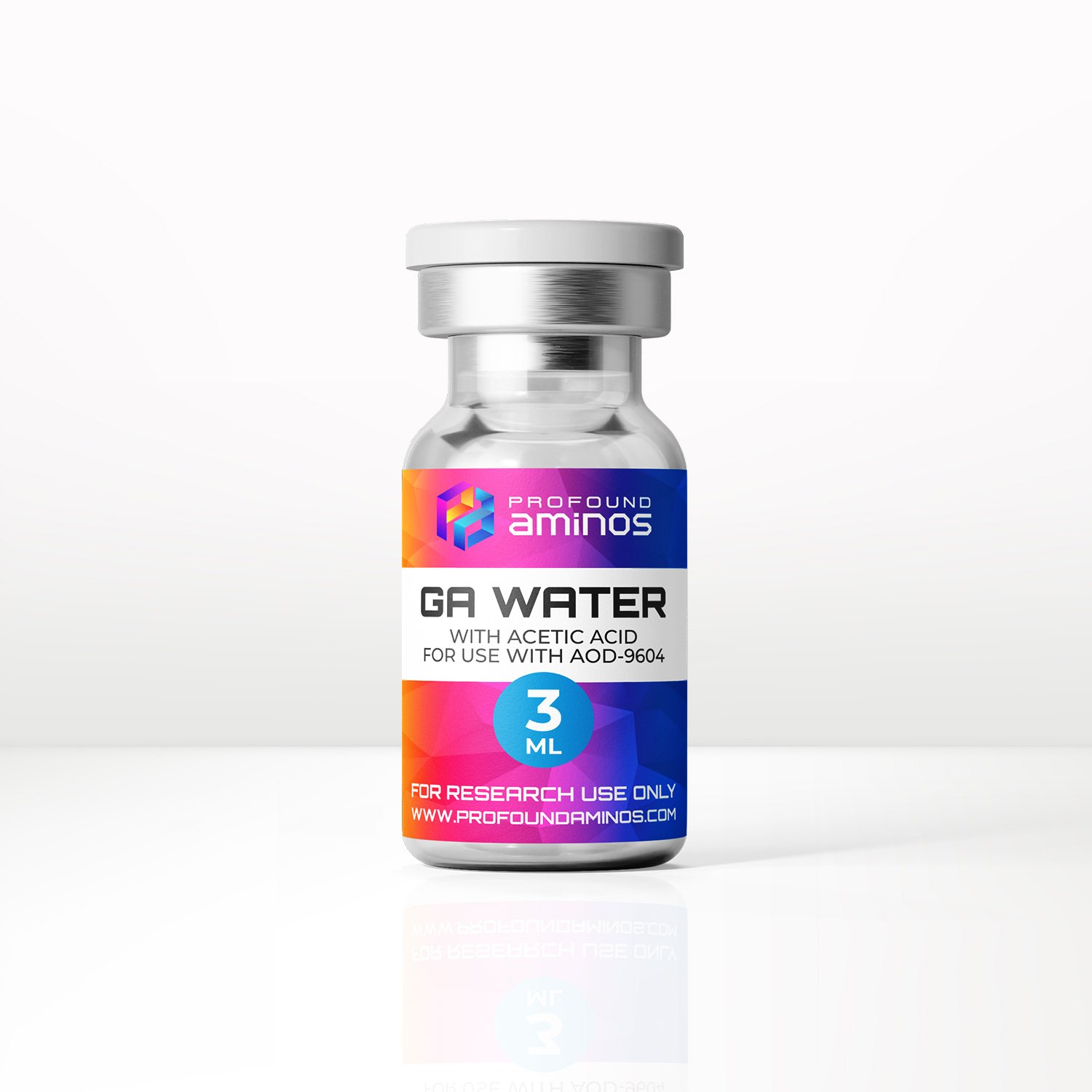
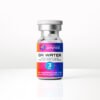
GA Water for AOD-9604
$8.00
GA Water (glycerin-acetic acid acidic aqueous diluent) is a sterile, research-grade reconstitution solution designed for peptides prone to aggregation in neutral aqueous media. Commonly used with AOD-9604 laboratory workflows, it provides a mildly acidic environment that supports improved peptide dispersion and solution consistency for controlled research applications.
COA documented, endotoxin screened, and supplied for laboratory research use only.
| tically sealed vial | |
| Sterility Processing | Sterile filtration — 0.22 µm membrane |
| Endotoxin | Screened per batch (LAL method); documented on COA |
| Storage | 2-8°C, protected from light; keep sealed until use |
| Regulatory Class | Research Use Only (RUO) — Not for human or veterinary use, not for compounding under 503A/503B |
| COA Availability | Per-batch COA downloadable from Profound Aminos COA portal |
| Companion Peptide | AOD-9604 (CID 71300630 / CID 156599045 acetate) — supplied separately |
Disclaimer : For Research Use Only (RUO). Not for human use.
DESCRIPTION
GA Water , glycerin-acetic acid acidic aqueous diluent — is a sterile, 0.22 μm membrane-filtered reconstitution solution formulated specifically for research-grade peptides that exhibit gelling, stringing, or visible aggregation when reconstituted in neutral bacteriostatic water. Its primary application in the 2026 U.S. research-peptide laboratory context is the preparation of AOD-9604 (PubChem CID 71300630; molecular formula C78H123N23O23S2; CAS not universally standardised for this formulation; 16-amino acid synthetic fragment of human growth hormone C-terminus) laboratory investigation protocols spanning receptor pharmacology, analytical characterisation, and controlled preclinical experimental design.
AOD-9604 contains a high proportion of hydrophobic amino acid residues , leucine, isoleucine, valine, phenylalanine — that promote hydrophobic clustering and peptide chain entanglement in neutral aqueous media. At neutral pH, the peptide approaches its isoelectric point, reducing net electrostatic repulsion and allowing inter-molecular hydrophobic contacts to dominate. The result is macroscopically visible gelling, clumping, or stringy particulate formation that compromises solution homogeneity and, consequently. volumetric precision in concentration-sensitive laboratory measurement workflows GA Water addresses this by providing a mildly acidic environment that protonates ionizable side chains, restoring net positive charge and electrostatic repulsion that disperses peptide molecules and produces clearer, more uniform solutions suited to reproducible research workflows.
Presented in a research-grade hermetically sealed sterile container, batch-verified and COA-documented for controlled laboratory use. Endotoxin screened per batch by LAL chromogenic method. Certificate of Analysis included. For laboratory research use only. Not intended for human or veterinary use, not for compounding under FDA 503A or 503B frameworks, and not a pharmacopeial-recognised diluent.
PRODUCT OVERVIEW -GA AA Water FORMULATION AND FUNCTION
Composition, Sterilisation, and Packaging
GA AA Water from Profound Aminos is a sterile aqueous solution composed of research-grade purified water and analytical-grade acetic acid,formulated to a mildly acidic target pH range documented per batch on the Certificate of Analysis. The solution is sterile-filtered through a 0.22 Each batch is hermetically sealed in a research-grade sterile container appropriate for controlled multi-point aspiration in laboratory settings µm membrane to ensure that microbial and particulate contamination is excluded from the final product.
GA AA Water is supplied as a separate reagent from AOD-9604. It does not contain AOD-9604. It functions as the reconstitution vehicle into which lyophilized AOD-9604 is dissolved by the researcher at the concentration required for the specific experimental protocol. The two products are used in conjunction but are quality-controlled, labeled, and shipped independently.
Laboratory Reconstitution Protocol – General Research Guidance
The following guidance describes standard laboratory practice for reconstituting lyophilized peptides with acidic diluents. It is provided for laboratory context only and does not constitute dosing instructions for human or veterinary use. Users should consult batch-specific COAs and their institutional protocols.
- Allow the lyophilized AOD-9604 research reagent to reach ambient temperature under desiccated conditions prior to opening, minimising moisture ingress.”
- “Determine the reconstitution volume from the molecular weight of AOD-9604 free base (C78H123N23O23S2) and the target molar concentration required by the specific laboratory protocol.”
- “Introduce GA AA Water gradually along the inner wall of the storage container — avoid direct contact with the lyophilized cake to prevent foaming or mechanical shearing of the peptide matri
- Store reconstituted aliquots at 2-8°C for short-term use or at -20°C for extended storage; avoid repeated freeze-thaw cycles which can promote deamidation at susceptible residues and disulfide scrambling.
- Inspect each aliquot visually before use; discard any aliquot showing visible particulates, cloudiness, or colour change.
- Consult the batch COA for specific pH, endotoxin level, and storage recommendations for each Profound Aminos GA AA Water lot.
AOD-9604 RESEARCH HISTORY – PRECLINICAL AND CLINICAL PROGRAMME OVERVIEW
Preclinical Pharmacology
The strongest mechanistic evidence for AOD-9604 emerges from preclinical investigation in dietinduced metabolic dysfunction rodent models. Published peer-reviewed research documented that AOD-9604 exposure modulated lipid metabolism parameters and adipocyte signalling markers in study animals following sustained protocol administration, with observed effects linked to beta-3 adrenergic receptor (beta3-AR) pathway activity.
Knockout model studies demonstrated that the chronic lipolytic signalling response was absent in beta3-AR-deficient animals, though certain acute energy expenditure markers persisted, suggesting an adipose-tissue-focused mechanistic profile that is not exclusively pathway-dependent. Critically, within the same preclinical programme, AOD-9604 did not produce the endocrine signature associated with intact human growth hormone no measurable IGF-1 elevation was recorded , positioning it as a research tool for studying adipocyte signalling pathways in isolation from growth-axis confounding variables.”
Nonclinical ADME studies characterised AOD-9604 as a rapidly degraded peptide with limited in vivo persistence. In vitro rat plasma work measured a serum half-life of approximately 4 minutes, with intact peptide undetectable after 56 minutes. Major degradants were N-terminal truncation products. In pig IV pharmacokinetics, terminal half-life was approximately 3 minutes. Oral absorption in rats was estimated at approximately 40% bioavailability, with a Tmax of 60 minutes following gavage. These parameters are historically reported and are not intended as guidance for any human application context.

AOD-9604 free base 2D structure — PubChem CID 71300630 — C78H123N23O23S2 — 16-amino acid synthetic hGH C-terminal fragment — RUO research reagent

AOD9604 acetate 2D structure — PubChem CID 156599045 — C80H127N23O25S2 — acetate salt form — RUO research reagent
Toxicology Data Summary
Nonclinical toxicology studies reported no genotoxic signal in Ames testing, chromosome aberration, or micronucleus assays. No treatment-related deaths or major toxicological findings were reported in a 4week IV rat study. Chronic oral NOAELs were reported as at least 100 mg/kg/day in rats and at least 50 mg/kg/day in cynomolgus monkeys in the 2014 JOFEM nonclinical publication. FDA’s 2024 PCAC briefing noted that this data package was insufficient to support compounded human use and that serious adverse events with unclear causality had been identified. The preclinical toxicology data is from sponsorlinked publications and should be interpreted with appropriate scrutiny regarding completeness and independence.
U.S. REGULATORY FRAMEWORK — AOD-9604 AND GA AA Water (MAY 2026)
| Area | Current Status (May 2026) | Source |
|---|---|---|
| FDA Approval | Not approved for any indication. No NDA or BLA filed. | FDA.gov |
| 503A Bulks List | PCAC voted 0-12 against inclusion (December 2024). Not on positive bulks list. | FDA PCAC Transcript 2024 |
| 503B Outsourcing | Not on 503B positive bulks list. Compounded human use not generally permitted. | FDA.gov |
| FDA Safety Risk | Compounded AOD-9604 identified as potentially presenting significant immunogenicity risk. | FDA Significant Safety Risk List |
| GRAS Status | Not on FDA GRAS list. Any company GRAS claim is a self-determination, not an FDA determination. | FDA PCAC Transcript 2024 |
| WADA Doping | Explicitly prohibited: growth hormone fragments including AOD-9604 on 2026 Prohibited List. | WADA 2026 Prohibited List |
| RUO Supply | Lawful as catalog research reagent under 21 CFR 312.2(b)(1) with appropriate RUO labeling. | 21 CFR 312.2(b)(1) |
| GA AA Water Status | Research-only solvent. Not a pharmacopeial diluent. Not for human or veterinary application. | Profound Aminos RUO Framework |
Critical Compliance Notes for U.S. Research-Peptide Content
- AOD-9604 is not FDA-approved. Any content stating or implying FDA approval is factually incorrect and creates regulatory risk.
- The PCAC 0-12 vote in December 2024 against 503A Bulks List inclusion is the most current regulatory disposition signal for compounding. This is not a minor procedural event — it reflects a comprehensive FDA assessment of the available safety and characterisation data.
- FDA’s determination that AOD-9604 presents a possible significant safety risk for immunogenicity via certain routes is published on FDA.gov and must be reflected accurately in any content addressing the compound’s status.
- RUO disclaimers do not provide blanket protection against FDA enforcement. FDA has stated in 2024-2026 enforcement communications that RUO labeling does not protect vendors when the overall marketing content indicates intended human use. Content must be genuinely and consistently research-oriented.
- GA AA Water is a vendor-defined research solvent, not a pharmacopeial diluent. It cannot be cited as an FDA-recognised reconstitution vehicle for any purpose beyond the research laboratory context.
- WADA’s 2026 Prohibited List explicitly names AOD-9604 under growth hormone fragments. Any purchaser who is a competitive athlete should be made aware of this prohibition through clearly visible content on supplier sites.
ANALYTICAL QUALITY CONTROL — AOD-9604 AND GA AA Water
| QC Parameter | Method | Why It Matters |
|---|---|---|
| Peptide Identity (AOD-9604) | LC-MS molecular weight + sequence mapping | Confirms correct 16-AA sequence; pyroglutamate and disulfide bond verification |
| Purity | RP-HPLC (>=95% standard catalog; >=99% premium batches) | Quantifies correct compound vs synthesis impurities |
| Related Impurities | RP-HPLC + LC-MS | Disulfide-scrambled forms, truncation products, deamidation fragments |
| Endotoxin Screening | LAL chromogenic method | Critical for any in vitro cellbased assay to prevent LPS confounding |
| Water Content | Karl Fischer titration | Affects true peptide mass for concentration calculations |
| Counter-Ion Control | Ion chromatography | Free base vs acetate distinction affects actual molarity |
| GA AA Water Sterility | 0.22 µm membrane filtration + sterility test | Prevents microbial contamination in reconstituted peptide solutions |
| GA AA Water pH | Calibrated pH measurement per batch | Confirms acidic pH range sufficient for aggregation prevention |
Why COA Depth Matters for This Peptide
AOD-9604 contains a disulfide bond between Cys7 and Cys14. Disulfide bonds can scramble during synthesis or storage, producing incorrectly folded isomers with different receptor interaction profiles and physicochemical behaviour. A purity figure from RP-HPLC alone confirms what fraction of the sample is the target compound by retention time — it cannot distinguish correctly cyclised from scrambled disulfide isomers unless combined with LC-MS sequence verification.
For a peptide where the disulfide bridge is structurally essential, COA documentation should include LC-MS molecular weight confirmation at minimum, and ideally peptide mapping or tandem MS fragmentation data.
Similarly, AOD-9604 contains asparagine and glutamine residues that are susceptible to deamidation under aqueous or thermal stress, generating isoaspartate and glutamate derivatives that alter the peptide’s charge and potentially its interaction with cellular targets. Lyophilized storage eliminates aqueous-phase deamidation pathways for the bulk material.
However, reconstituted solutions in GA AA Water or other aqueous media should be used promptly and not subjected to repeated freeze-thaw cycles that can transiently raise temperature at the ice-water interface. Every Profound Aminos AOD-9604 and GA AA Water batch COA is downloadable from the Profound Aminos COA portal prior to or upon order.
WHY SOURCE FROM PROFOUND AMINOS
- GA AA Water Matched to AOD-9604 Aggregation Profile
Not all acidic diluents are equivalent. GA AA Water from Profound Aminos is pH-controlled and batch-verified to the specific range required to prevent AOD-9604 gelling while maintaining a pH compatible with laboratory handling. The formulation reflects direct application of the mechanistic knowledge that AOD9604’s hydrophobic clustering is pH-dependent and addressable with dilute acetic acid — not improvised acidification. Each batch is COA-documented with pH value, sterility, and endotoxin data. - Sequence-Confirmed AOD-9604 by LC-MS — Disulfide Bond Verified
AOD-9604 contains a critical disulfide bridge between Cys7 and Cys14 that is essential to the peptide’s correct folded geometry. Profound Aminos verifies every AOD-9604 batch by LC-MS molecular weight confirmation and peptide sequence mapping to ensure that the disulfide is correctly formed and the amino acid sequence matches the registered CID 71300630 structure. RP-HPLC purity alone cannot confirm this — LC-MS identity confirmation is the non-negotiable quality standard for a disulfide-containing research peptide. - Endotoxin Screened — Critical for In Vitro Research Validity
Lipopolysaccharide (LPS) endotoxin from gram-negative bacteria activates NF-kappaB via Toll-like receptor 4 (TLR4) and stimulates adipocyte signalling pathways that overlap with the metabolic pathways being investigated in AOD-9604 research programmes. Unscreened endotoxin contamination in either the peptide preparation or the reconstitution solvent would introduce a confounding variable that could not be distinguished from peptide-mediated effects without additional control experiments. Both AOD9604 and GA AA Water from Profound Aminos are screened to defined endotoxin limits by LAL chromogenic method, with results documented on batch COAs. - USA Domestic Cold-Chain — No Customs Temperature Excursion Risk
Peptides containing asparagine, glutamine, and disulfide bonds are thermally sensitive. International sourcing introduces uncontrolled temperature excursions during customs holding that can promote deamidation, disulfide scrambling, and oxidation of the methionine-free but redox-sensitive cysteine residues of AOD-9604. Profound Aminos ships both AOD-9604 and GA AA Water exclusively within the USA via monitored cold-chain logistics from a climate-controlled facility to the researcher’s address, eliminating international transit degradation risk.
REGULATORY AND COMPLIANCE STATEMENT (RUO)
| Category | Statement |
|---|---|
| Regulatory Status | Research Use Only (RUO) — U.S. Federal Regulatory Framework | 21 CFR 312.2(b)(1) |
| AOD-9604 FDA Status (May 2026) | Not approved. No NDA or BLA filed. No active IND registered. Orphan Drug Designation (sarcoidosis-adjacent research, 2011 era) — NOT an approval. PCAC voted 0-12 against 503A Bulks List inclusion (Dec 2024). Not on 503A or 503B positive bulks list. |
| GA AA Water FDA Status | Not a pharmacopeial diluent. Not evaluated by FDA. Not for human injection or compounding use. Research laboratory solvent only. |
| Compounding Status | AOD-9604 not on 503A or 503B positive bulks lists. Compounding of AOD-9604 for human use not generally permitted under current FDA guidance. |
| WADA Status | AOD-9604 explicitly listed: growth hormone fragments, e.g. AOD-9604 — Prohibited List 2026. Not for use by competitive athletes. |
| Not a Drug | Neither GA AA Water nor AOD-9604 as supplied has been evaluated by FDA for safety or efficacy in any human indication. |
| Chemical Reference | Supplied solely for controlled laboratory testing and preclinical scientific investigation in qualified research settings. |
| PPE | Gloves, lab coat, and protective eyewear during reconstitution and handling of both materials. |
STRICT PROHIBITION: Promoting, distributing, or using either GA AA Water or AOD-9604 for any application involving administration to living organisms is strictly prohibited and constitutes a violation of U.S. federal law. FDA enforcement actions in 2024-2026 have established that RUO disclaimers do not protect vendors when overall marketing content indicates intended human use.
These statements have not been evaluated by the Food and Drug Administration. This product is not intended to diagnose, treat, cure, or prevent any disease.
FREQUENTLY ASKED QUESTIONS
Q1: What is GA AA Water and why is it used with AOD-9604?
GA AA Water is a vendor-defined acidic aqueous reconstitution solution containing sterile purified water and a low concentration of acetic acid. It is used with AOD-9604 because the peptide’s amino acid composition — rich in hydrophobic residues such as leucine, isoleucine, valine, and phenylalanine — causes visible gelling and aggregation when reconstituted in neutral water at physiological pH. The acidic pH of GA AA Water protonates ionizable side chains, introducing net positive charge that promotes electrostatic repulsion between peptide molecules and reduces hydrophobic clustering. The result is a clearer, more uniform solution that supports accurate volumetric handling in laboratory protocols. GA AA Water is a research reagent. It is not an FDA-recognised pharmacopeial diluent and is not intended for any application outside a controlled laboratory setting.
Q2: What are the PubChem identifiers for AOD-9604?
AOD-9604 (free base) is registered in PubChem under CID 71300630 with molecular formula C78H123N23O23S2. The acetate salt form, AOD9604 acetate, is registered separately under CID 156599045 with molecular formula C80H127N23O25S2. These records include 2D structure diagrams, InChIKey, canonical SMILES, and computed physicochemical properties. Both CIDs can be accessed directly at pubchem.ncbi.nlm.nih.gov. The free base and acetate are distinct bulk drug substances with different molecular formulae and molecular weights, even though the active peptide sequence is identical.
Q3: What is the FDA regulatory status of AOD-9604 in 2026?
As of May 2026, AOD-9604 has no FDA marketing approval for any human indication. The Pharmacy Compounding Advisory Committee (PCAC) voted 0-12 in December 2024 against placing AOD-9604 free base and acetate on the 503A Bulks List. FDA has stated that compounded drugs containing AOD9604 may present significant safety risks, specifically citing immunogenicity concerns for certain administration routes and insufficient characterisation data. AOD-9604 is not on any FDA GRAS list. Company GRAS self-determinations do not constitute an FDA determination. Profound Aminos supplies AOD-9604 and GA AA Water exclusively as RUO research reagents under 21 CFR 312.2(b)(1).
Q4: Is GA AA Water the same as bacteriostatic water?
No. Bacteriostatic water is a standard laboratory reconstitution vehicle consisting of sterile purified water containing 0.9% benzyl alcohol as a preservative, buffered to approximately neutral pH. GA AA Water is a distinct vendor-defined research solvent containing sterile water and acetic acid, formulated to a mildly acidic pH specifically to address the aggregation behaviour of AOD-9604 and similar hydrophobic peptides in neutral aqueous media. The acidic pH of GA AA Water is its defining functional feature. These two solvents are not interchangeable for AOD-9604 laboratory work because neutral pH conditions promote the gelling and hydrophobic clustering that GA AA Water is specifically designed to reduce.
Q5: Why does AOD-9604 gel or clump in neutral water?
AOD-9604 contains a significant proportion of hydrophobic amino acid residues. At neutral pH, the peptide’s net charge approaches zero near its isoelectric point, reducing electrostatic repulsion between molecules. Without adequate charge-based repulsion, hydrophobic side chains — particularly those of leucine, isoleucine, valine, and phenylalanine — tend to cluster together through hydrophobic interactions. Multiple peptide chains can entangle and trap water molecules in a three-dimensional gellike network that resists dispersion. This phenomenon is well-documented in practitioner-level technical discussions from research peptide suppliers and is consistent with the physicochemical behaviour expected from the peptide’s sequence composition. Acidic reconstitution media such as GA AA Water address this by shifting the pH away from the isoelectric point.
Q6: Can GA AA Water or AOD-9604 be used in human compounding under 503A or 503B?
No. AOD-9604 is not on the FDA 503A or 503B positive bulks lists and compounded preparations containing AOD-9604 are not generally permitted under current FDA guidance. The PCAC voted 0-12 in December 2024 against 503A Bulks List inclusion. Legal analyses of peptide compounding confirm that RUO-labelled bulk substances without an approved reference product, USP monograph or bulkslist authorisation do not meet criteria for lawful human compounding. GA AA Water, as a vendor-defined research solvent and not an FDA-recognised pharmacopeial diluent, also remains outside the compounding framework. Both materials are supplied strictly for laboratory and preclinical research use only.
Q7: What analytical quality controls does Profound Aminos perform on AOD-9604 and GA AA Water?
For AOD-9604: every batch is verified by LC-MS for molecular weight and sequence identity, RP-HPLC for purity, and LAL chromogenic method for endotoxin. These data are reported on the per-batch Certificate of Analysis (COA) available from the Profound Aminos COA portal. For GA AA Water: sterility is ensured by 0.22 µm membrane filtration; pH is measured and documented per batch; and endotoxin screening is performed by LAL method. Both products include batch-specific COAs documenting all critical quality attributes.
Q8: Is AOD-9604 a growth hormone?
No. AOD-9604 is a synthetic 16-amino acid peptide fragment derived from the C-terminal region of human growth hormone (hGH), corresponding to residues 177-191 with an added N-terminal tyrosine. It was designed to investigate lipolytic and metabolic signalling pathways associated with the Cterminal domain of hGH while avoiding the growth-promoting endocrine signalling of intact hGH. In published research, AOD-9604 did not raise serum IGF-1 levels and its mechanism of action was characterised by FDA in 2024 as unknown but unlikely to involve growth hormone receptors. AOD9604 is not a growth hormone, not a growth hormone secretagogue, and is not approved for any indication.
KEY REFERENCES – PubMed / PubChem / FDA / Regulatory Verified
| # | Source | Relevance |
|---|---|---|
| 1 | PubChem CID 71300630 — AOD-9604 (free base) | Primary chemical identity, molecular formula C78H123N23O23S2, structure, computed properties |
| 2 | PubChem CID 156599045 — AOD9604 Acetate | Acetate salt form C80H127N23O25S2 — distinct bulk substance from free base |
| 3 | ClinicalTrials.gov NCT03865953 (LAT8881 Protocol) | 16-AA sequence confirmation; disulfide bridge Cys7-Cys14; hexadecapeptide classification |
| 4 | JOFEM 2013 — AOD-9604 safety and tolerability summary (6 RCTs) | Human safety database; no IGF-1 rise; no anti-AOD antibodies detected in tested subset |
| 5 | JOFEM 2014 — AOD-9604 nonclinical pharmacology and toxicology | ADME data: rat plasma t1/2 ~4 min; oral absorption ~40%; NOAEL 100 mg/kg/day rats |
| 6 | FDA PCAC Briefing Document — December 2024 (FDA Media 185641/185642) | PCAC 0-12 vote against 503A Bulks inclusion; immunogenicity concerns; missing characterisation data |
| 7 | FDA Significant Safety Risks List — Certain Bulk Drug Substances | AOD-9604 listed among compounded substances potentially presenting significant safety risks |
| 8 | PepXpress — Acetic Acid Water (AOD Solution) 15 mL | Commercial GA AA Water product description; acetic acid aqueous diluent for AOD-9604 reconstitution |
| 9 | LegendaryPeptides — AOD-9604 Acetic Acid Reconstitution Technical Blog | Practitioner-level explanation of AOD-9604 gelling in neutral water and acidic diluent rationale |
| 10 | Frier Levitt — Regulatory Status of Peptide Compounding 2025 | Legal analysis confirming 503A/503B compounding limits for RUO peptides including AOD-9604 |
| 11 | WADA 2026 Prohibited List | AOD-9604 explicitly listed under growth hormone fragments — prohibited in all competitive sports |
| 12 | PubMed 25208511 — Drug Testing and Analysis 2015 | Six identified AOD-9604 metabolites; stable urinary metabolite for doping detection |
| 13 | Google Search Central — Helpful Content Guidelines 2026 | YMYL E-E-A-T requirements for health-adjacent content; spam policies; structured data requirements |
| 14 | Google Search Central — FAQ Rich Results Deprecated May 2026 | FAQ schema deprecated; SEO strategy should not rely on FAQ rich result traffic |
| 15 | Grand View Research — Peptide Therapeutics Market 2033 | Global peptide market $140.86B (2025); projected ~$294.58B by 2033; CAGR 6.8% |
| 16 | Eric Topol / Ground Truths Substack — The Peptide Craze | Clinician critique of unregulated peptide wellness market; AOD9604 mentioned specifically |
| 17 | ICH Q6B Guideline — Specifications for Biotechnological / Biological Products | Analytical quality standard framework for peptide characterisation applicable to research reagents |
FOR RESEARCH USE ONLY. NOT FOR HUMAN OR ANIMAL APPLICATION.
Be the first to review “GA Water for AOD-9604”
Related products
Uncategorized
Uncategorized
Uncategorized
Uncategorized
Uncategorized
Uncategorized
Uncategorized
Uncategorized
Reviews
There are no reviews yet.