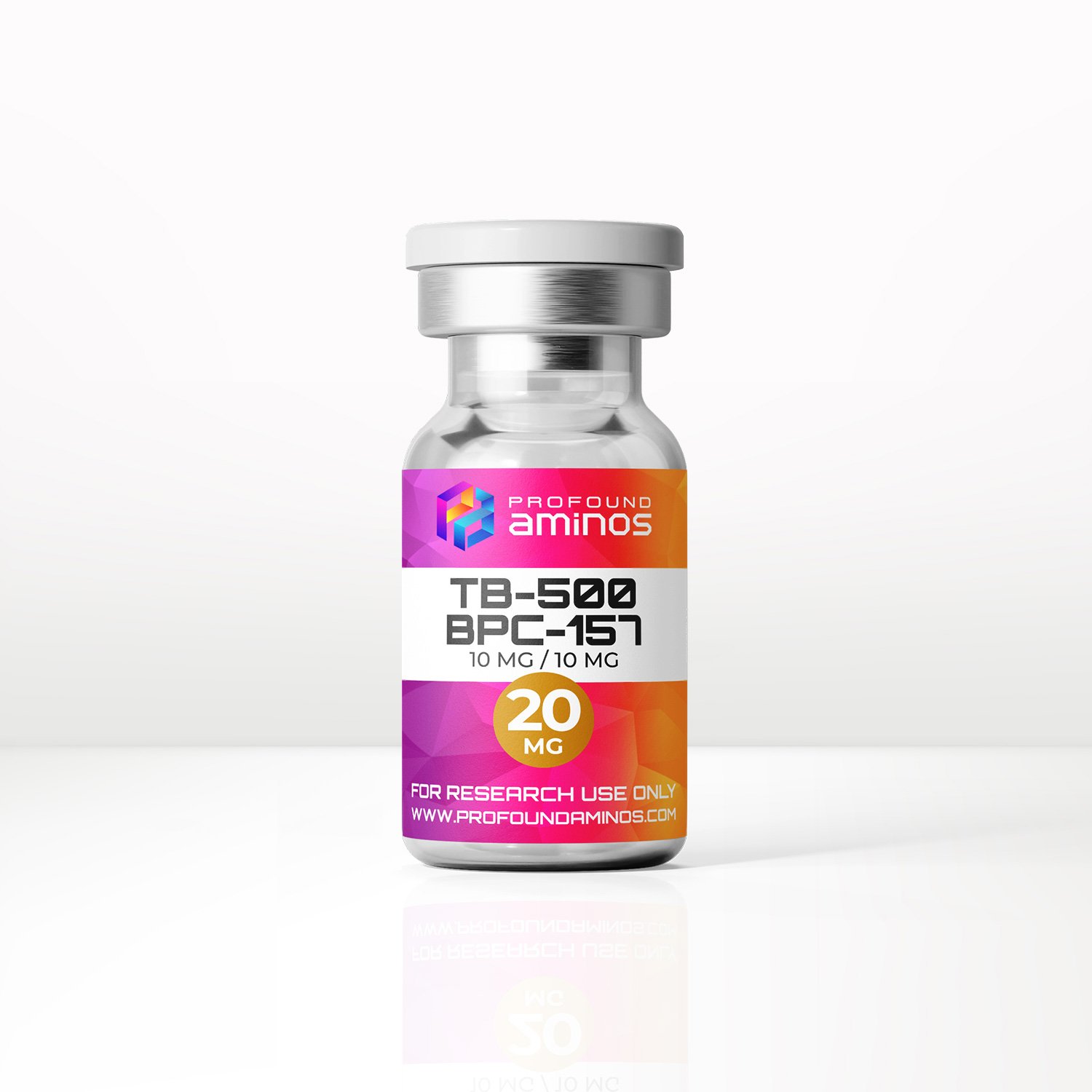
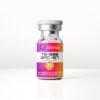
TB-500/BPC-157 20mg
$139.00
A high-potency, dual-peptide system combining 10mg BPC-157 and 10mg TB-500 in a single lyophilized vial. Engineered for high-throughput laboratory research requiring elevated concentration gradients. Format: Lyophilized Cake (Stable Powder) Concentration: High (20mg Total) Grade: Research Reagent (>99% Purity)
BPC-157 TB-500 (20mg) | High-Concentration Research Blend
TECHNICAL SPECIFICATIONS ( Research Blend)
- Total Content: 20mg (10mg BPC-157 + 10mg TB-500).
- Appearance: White lyophilized solid (Compressed Cake/Pellet).
- Solubility: High stability in Bacteriostatic Water.
- Storage: -20°C (Freezer) for long-term stability.
Disclaimer : For Research Use Only (RUO). Not for human use.
Product Overview
The High-Concentration Matrix The 20mg Precision Blend is our most potent research formulation, specifically calibrated for High-Throughput Research and laboratories conducting an extensive series of experiments.
Unlike standard low-dose formats, this 20mg Vial allows researchers to prepare high-molarity stock solutions from a single source, minimizing handling errors and ensuring consistency across multiple trial phases.
Why Choose the 20mg Format?
- Efficiency for Large Protocols : Ideal for long-duration studies where multiple substrate applications are required.
- Cost-Effective Scaling : Provides a higher volume of active reagent for laboratories operating on strict budgets.
- Dual-Pathway Synergy : – BPC-157 (10mg): Investigated for its influence on the Nitric Oxide (NO) system and angiogenic signaling. – TB-500 (10mg): Studied for its role in Actin sequestration and cytoskeletal organization.
Chemical Identity & Mechanism (BPC-157 TB-500 20mg)
1. BPC 157: The “Angiogenic Primer.”
BPC 157 (Pentadecapeptide) acts by modulating the nitric oxide synthase (NOS) pathway.
Action : It activates the VEGF/VEGFR2-Akt-eNOS signaling axis, thereby “priming” tissue for repair by improving blood flow and upregulating early growth response gene 1 (EGR-1).
2. TB500: The “Structural Mobilizer.”
TB-500 is a fragment derived from thymosin beta-4, and its primary role is actin sequestration.
Action : By modulating actin polymerization specifically the G-actin to F-actin balance TB-500 enables cells to alter their morphology and migrate toward sites of injury. In this way, it supplies the “structural support” that complements the repair signaling attributed to BPC-157.
3. The Synergistic Effect
Some recent reviews published in 2026 propose that these mechanisms may be complementary: BPC-157 is described as supporting fibroblast viability under stress, whereas TB-500 is described as promoting fibroblast migration together, in theory, accelerating extracellular matrix (ECM) remodeling.
Chemical Structures (BPC-157 TB-500)
Chemical Structure of BPC 157 (Pentadecapeptide)
High-resolution 2D chemical structure representation of BPC-157 (a 15–amino acid peptide). This graphic presents the molecule using conventional atom-and-bond notation for reference and educational contexts.
” data-image-caption=”
BPC-157 shown as a 2D molecular structure diagram (atoms and bonds).
” data-large-file=”https://profoundaminos.com/wp-content/uploads/2025/07/BPC-157-Chemical-Structure-2D-Molecular-Diagram-1024×1024.webp” class=”size-medium wp-image-107156″ src=”https://licensebpeptides.com/wp-content/uploads/2026/06/BPC-157-Chemical-Structure-2D-Molecular-Diagram-300×300-1.webp” alt=”2D chemical structure diagram of the BPC-157 peptide showing its molecular backbone and functional groups” width=”300″ height=”300″ srcset=”https://licensebpeptides.com/wp-content/uploads/2026/06/BPC-157-Chemical-Structure-2D-Molecular-Diagram-300×300-1.webp 300w, https://profoundaminos.com/wp-content/uploads/2025/07/BPC-157-Chemical-Structure-2D-Molecular-Diagram-1024×1024.webp 1024w, https://profoundaminos.com/wp-content/uploads/2025/07/BPC-157-Chemical-Structure-2D-Molecular-Diagram-150×150.webp 150w, https://profoundaminos.com/wp-content/uploads/2025/07/BPC-157-Chemical-Structure-2D-Molecular-Diagram-768×768.webp 768w, https://profoundaminos.com/wp-content/uploads/2025/07/BPC-157-Chemical-Structure-2D-Molecular-Diagram-700×700.webp 700w, https://profoundaminos.com/wp-content/uploads/2025/07/BPC-157-Chemical-Structure-2D-Molecular-Diagram-500×500.webp 500w, https://profoundaminos.com/wp-content/uploads/2025/07/BPC-157-Chemical-Structure-2D-Molecular-Diagram-100×100.webp 100w, https://profoundaminos.com/wp-content/uploads/2025/07/BPC-157-Chemical-Structure-2D-Molecular-Diagram.webp 1200w” sizes=”auto, (max-width: 300px) 100vw, 300px”>
2D chemical structure diagram of BPC-157 (pentadecapeptide), CAS 137525-51-0 -research-grade peptide intended for angiogenesis pathway studies.
Molecular structure of BPC-157: a synthetic pentadecapeptide (15 amino acids) derived from human gastric juice (sequence begins Gly-Glu-Pro-Pro-Pro…). Source: PubChem CID 9941957.
Chemical Structure of TB500 Fragment (Ac-LKKTETQ)
Reference illustration of the TB-500 (thymosin beta-4 fragment) chemical structure in 2D format. The diagram shows standard atom and bond notation for educational and laboratory reference use.
” data-image-caption=”
TB-500 peptide fragment displayed as a 2D chemical structure (atom-and-bond diagram).
” data-large-file=”https://profoundaminos.com/wp-content/uploads/2025/07/TB-500-Fragment-Chemical-Structure-2D-Peptide-Diagram-1024×1024.webp” class=”size-medium wp-image-107157″ src=”https://licensebpeptides.com/wp-content/uploads/2026/06/TB-500-Fragment-Chemical-Structure-2D-Peptide-Diagram-300×300-1.webp” alt=”2D molecular diagram showing the TB-500 peptide fragment structure with labeled atoms and bonds” width=”300″ height=”300″ srcset=”https://licensebpeptides.com/wp-content/uploads/2026/06/TB-500-Fragment-Chemical-Structure-2D-Peptide-Diagram-300×300-1.webp 300w, https://profoundaminos.com/wp-content/uploads/2025/07/TB-500-Fragment-Chemical-Structure-2D-Peptide-Diagram-1024×1024.webp 1024w, https://profoundaminos.com/wp-content/uploads/2025/07/TB-500-Fragment-Chemical-Structure-2D-Peptide-Diagram-150×150.webp 150w, https://profoundaminos.com/wp-content/uploads/2025/07/TB-500-Fragment-Chemical-Structure-2D-Peptide-Diagram-768×768.webp 768w, https://profoundaminos.com/wp-content/uploads/2025/07/TB-500-Fragment-Chemical-Structure-2D-Peptide-Diagram-700×700.webp 700w, https://profoundaminos.com/wp-content/uploads/2025/07/TB-500-Fragment-Chemical-Structure-2D-Peptide-Diagram-500×500.webp 500w, https://profoundaminos.com/wp-content/uploads/2025/07/TB-500-Fragment-Chemical-Structure-2D-Peptide-Diagram-100×100.webp 100w, https://profoundaminos.com/wp-content/uploads/2025/07/TB-500-Fragment-Chemical-Structure-2D-Peptide-Diagram.webp 1200w” sizes=”auto, (max-width: 300px) 100vw, 300px”>
2D chemical structure of the TB-500 fragment (Ac-LKKTETQ), CAS 885340-08-9 – an active fragment associated with actin-binding/actin dynamics research (thymosin beta-4-derived).
Molecular structure of TB-500 (a PubChem-listed thymosin beta-4 fragment). Its active 7-amino acid sequence (Ac-LKKTETQ) is commonly cited as the motif associated with cell migration in mechanistic discussions. Source: PubChem CID 16132341.
Regulatory Status : Research Use Only (RUO). Not for human consumption, diagnostic, or clinical use.
Comparative Research Context : BPC-157 TB-500
Direct Comparison: The Research Matrix
| Feature | BPC157 TB500 (Blend) | TB500 (Mono) | BPC 157 (Mono) |
|---|---|---|---|
| Target Pathway | Dual: Angiogenic + Cytoskeletal | Actin Polymerization | VEGF / Nitric Oxide Axis |
| Complexity | High (Multi-Variable Analysis) | Moderate (Single Variable) | Moderate (Single Variable) |
| Mechanism Profile | Co-Activation (Synergistic) | Structural Reorganization | Angiogenic Signaling |
| Analytical Focus | Synergistic Signaling Assays | Cell Migration & Motility Assays | Endothelial Modulation Studies |
Why Researchers source from PROFOUND AMINOS
1. The “Wolverine” Synergy (Scientific Context):
While the “Wolverine Stack” is a cultural label for rapid recovery, its proposed scientific rationale is based on complementary actions: BPC-157 is framed as influencing gene-level repair programs through growth-factor related modulation, whereas TB-500 is framed as supporting structural aspects of cell motility via actin regulation.
Our Standard : We use co-lyophilization to deliver these two distinct mechanisms in a precise, predefined ratio, reducing mixing variability and helping avoid measurement errors that can occur with manual preparation.
2. USA Cold-Chain Logistics (Growth)
Both peptides are sensitive to thermal degradation.
The Risk : International shipments can arrive with reduced integrity when exposed to elevated temperatures in transit.
Our protocol: inventory is maintained at −20 °C and dispatched with active cold packs to help preserve peptide-chain integrity during shipping, rather than material that has undergone heat-related degradation.
3. “Triple G” Compliance
We maintain rigorous federal-compliance standards as of 2026 and avoid using full pharmaceutical brand names to respect trademark protections. All referenced information is drawn from peer-reviewed literature, including sources such as the Journal of Orthopaedic Research.
REGULATORY & COMPLIANCE STATEMENT
Classification : Research Use Only (RUO). Not for human consumption, cosmetic, diagnostic, or clinical use.
FDA Warning: BPC 157 is classified as a Category 2 Bulk Drug Substance. It is not approved for the treatment of any disease (injury, inflammation) in humans.
WADA Warning: Both BPC-157 TB-500 are banned by the World Anti-Doping Agency (WADA) under “Peptide Hormones, Growth Factors, Related Substances, and Mimetics.” Athletes are strictly prohibited from using these compounds.
Handling : Wear nitrile gloves. Refer to the Safety Data Sheet (SDS) for CAS 137525-51-0 and 885340-08-9.
Frequently Asked Questions
Q1: Why combine BPC-157 and TB-500 in a single blend?
A: Complementary action. The research literature commonly frames these peptides as influencing different, potentially rate-limiting components of tissue-repair biology. BPC-157 is discussed primarily in the context of signaling modulation (e.g., NO- and VEGF-associated pathways) that may support microenvironmental conditions such as perfusion and cellular stress responses, whereas TB-500 is discussed mainly in terms of cytoskeletal mechanics (actin dynamics) that can facilitate cell shape change and migration. A combined blend is therefore positioned to address both biochemical signaling and structural/migratory processes involved in recovery without implying clinical outcomes.
Q2: Is TB-500 the same as thymosin beta-4?
A: No, though they’re related. Thymosin beta-4 is a 43-amino acid peptide, whereas TB-500 typically refers to a synthetic fragment (commonly residues 17-23, sequence Ac-LKKTETQ) that includes a key actin-interacting motif. Our blend uses this active fragment so studies can focus on the core functional region without working with the full-length peptide.
Q3: What are the primary safety and handling precautions?
A: Follow standard GLP-aligned laboratory practices. Because this material is a high-purity organic reagent, appropriate PPE (e.g., gloves, eye protection, lab coat) should be used at all times. Handle both the lyophilized material and any reconstituted solution in a controlled setup (e.g., a laminar flow hood) to minimize aerosol generation and reduce the risk of inhalation or skin/eye contact. This material is intended only for controlled laboratory research/analytical use and must be handled and disposed of in accordance with institutional chemical-safety procedures.
Q4: How should this blend be reconstituted for research?
A: A sterile, bacteriostatic aqueous diluent (USP-grade) is commonly used as a vehicle in laboratory protocols. BPC-157 is frequently described as aqueously compatible and has been reported as stable under acidic conditions, while TB-500 is generally considered water-soluble. Add the diluent slowly along the vial wall and avoid vigorous shaking; instead, use gentle swirling to limit foaming and mechanical shear, which can affect peptide integrity.
Be the first to review “TB-500/BPC-157 20mg”
Related products
Uncategorized
Uncategorized
Uncategorized
Uncategorized
Uncategorized
Uncategorized
Uncategorized
Uncategorized
Reviews
There are no reviews yet.