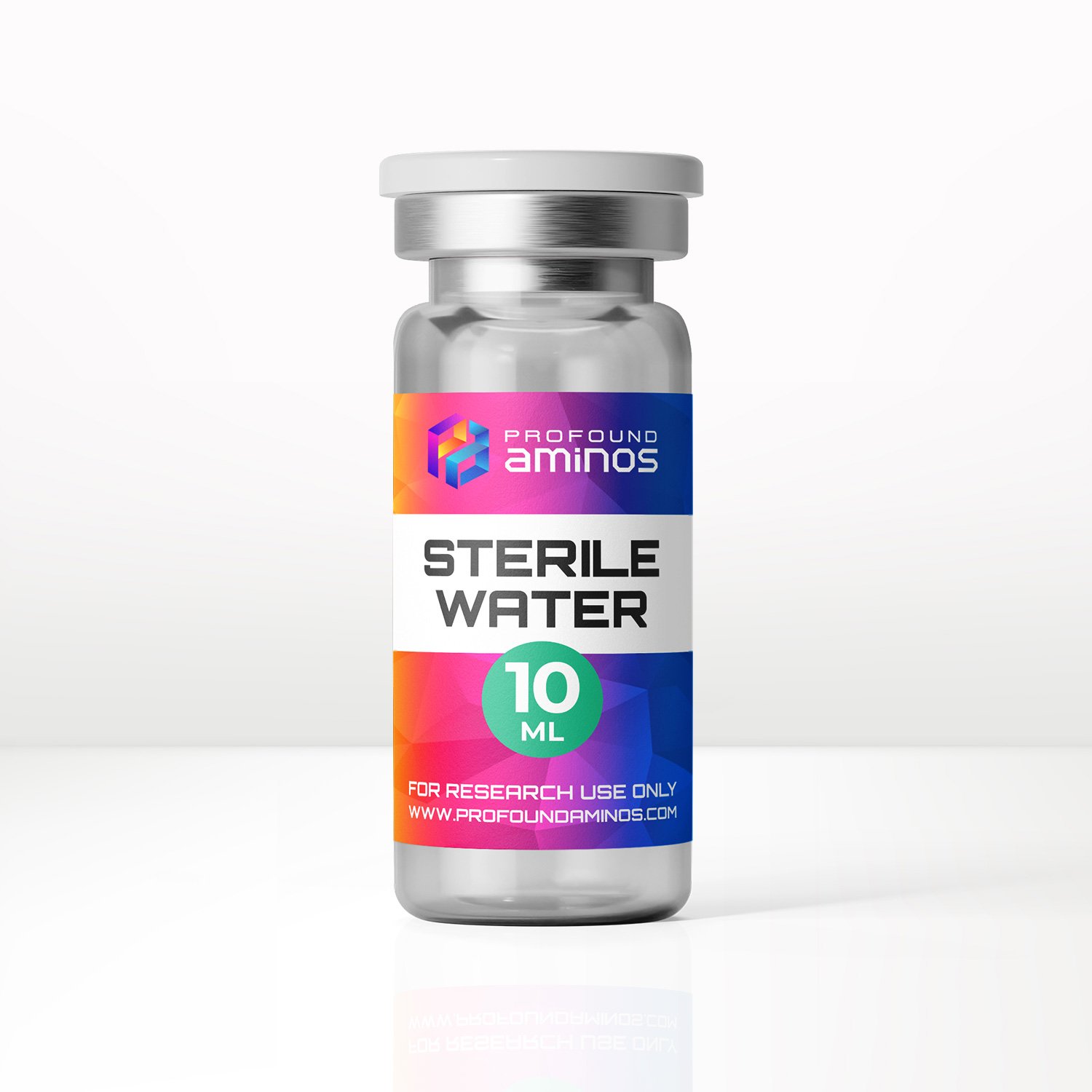
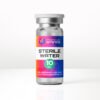
Sterile Water
$7.00
Sterile Water for Injection, USP is a preservative-free, sterile, nonpyrogenic aqueous solvent used for laboratory reconstitution of peptides, proteins, and research reagents.
With molecular formula H2O (PubChem CID 962), it contains no benzyl alcohol or antimicrobial additives, making it suitable for preservative-sensitive research applications. Profound Aminos supplies endotoxin-screened, sterile single-use SWFI with per-batch COA documentation for research use only.
Sterile Water for Injection, USP
Parenteral Reconstitution Vehicle | Research Grade Aqueous Solvent | USP Monograph Compliant
H2O | MW 18.015 g/mol | PubChem CID 962 | CAS 7732-18-5 | Preservative-Free | Single-Use Container | Endotoxin Tested
FOR LABORATORY AND PRECLINICAL RESEARCH EXCLUSIVELY. Not intended for administration to living organisms.
TECHNICAL SPECIFICATIONS
| PARAMETER | SPECIFICATION |
|---|---|
| Product Reference | Sterile Water for Injection, USP — Parenteral Reconstitution Vehicle |
| Also Known As | SWFI | Sterile Water | Water for Injection (research grade) | Aqueous Reconstitution Vehicle |
| Chemical Name (IUPAC) | Oxidane |
| Molecular Formula | H2O |
| Molecular Weight | 18.015 g/mol |
| PubChem CID | 962 (Water) | 22247451 (Water, sterile filtered) |
| CAS Registry Number | 7732-18-5 |
| UNII | 059QF0KO0R |
| ChemSpider ID | 937 |
| Physical Format | Clear, colorless, odorless sterile aqueous liquid — single-use hermetically sealed container |
| pH | 5.0 to 7.0 (typical ~5.5) — per USP Monograph |
| Osmolarity | ~0 mOsmol/L — hypotonic; combine with appropriate solutes before use |
| Preservative | None — preservative-free. No benzyl alcohol, no antimicrobial agent, no buffer. |
| Sterility | Sterile — tested per USP <71> Sterility Tests |
| Endotoxin Screening | ≤0.25 EU/mL — LAL chromogenic method (USP <85>) |
| Particulate Matter | Meets USP <788> for particulate matter in parenteral-grade products |
| Container Material | Type I or II borosilicate glass OR polyolefin copolymer (ethylene-propylene) — per FDA-approved specifications |
| Volume | Single-use containers — standard research sizes |
| Storage | 20°C to 25°C — USP Controlled Room Temperature. Protect from freezing. |
| Regulatory Class | USP Monograph compliant — research-grade parenteral vehicle |
| COA Availability | Per-batch COA from Profound Aminos COA portal — endotoxin, sterility, pH documented |
PRODUCT OVERVIEW
Sterile Water for Injection, USP is the simplest and most universally characterised pharmaceutical-grade aqueous vehicle. Its chemical formula H2O encompasses a single oxygen atom covalently bonded to two hydrogen atoms at a 104.5-degree angle — this geometry creates the permanent molecular dipole (1.85 Debye) that makes water a universal polar solvent capable of dissolving peptide lyophilizates by disrupting the intermolecular forces that stabilize the dry powder matrix.
MOLECULAR IDENTITY – PubChem CID 962
Sterile Water for Injection, USP (H2O) — PubChem CID 962

| IDENTIFIER | DETAIL | REGISTRY / SOURCE |
|---|---|---|
| PubChem CID | 962 (Water) | 22247451 (Water, sterile filtered) | pubchem.ncbi.nlm.nih.gov/compound/962 |
| Molecular Formula | H2O | PubChem CID 962 / USP Monograph |
| Molecular Weight | 18.015 g/mol | PubChem CID 962 / FDA labels |
| CAS Registry Number | 7732-18-5 | ChemIDplus / PubChem / CAS |
| UNII | 059QF0KO0R | FDA UNII / PubChem |
| ChemSpider ID | 937 | ChemSpider (RSC) |
| InChI | InChI=1S/H2O/h1H2 | PubChem CID 962 |
| SMILES (Canonical) | O | PubChem CID 962 |
| ATC Code | V07AB — solvents and diluting agents | WHO ATC Classification |
| pH Range | 5.0 to 7.0 (typical ~5.5) | FDA-approved labeling — Hospira / Baxter |
| Osmolarity | ~0 mOsmol/L — hypotonic | USP Monograph / FDA labeling |
| Endotoxin Limit | ≤0.25 EU/mL — LAL chromogenic method (USP <85>) | USP / FDA Bacterial Endotoxins guidance |
| Preservative | None — preservative-free by definition | USP Monograph — distinguishes from BWFI |
| Container Type | Single-use — Type I/II borosilicate glass or polyolefin | FDA-approved labeling |
| Storage | 20°C to 25°C — USP Controlled Room Temperature | FDA-approved labeling |
| USP Classification | Finished pharmaceutical product — NOT bulk ingredient water | FDA Water for Pharmaceutical Use guide |
RESEARCH APPLICATIONS — 2026 LABORATORY USE CONTEXT
In 2026-era peptide pharmacology, receptor binding, and preclinical research, Sterile Water for Injection, USP is utilised as the primary aqueous reconstitution vehicle for the following research applications:
1.Lyophilized Peptide Reconstitution — Preservative-Free Applications
Reconstituting lyophilized peptides that are sensitive to benzyl alcohol or other preservative agents. Research applications include preparation of oxidation-sensitive peptides containing Trp, Met, or Cys residues; reconstitution of cyclic peptide scaffolds where preservative-amide bond interactions could alter conformational geometry; single-use research aliquot preparation for receptor binding assays, ELISA, and functional cellular assays; and preparation of peptide working solutions for immediate use where no multi-day storage is required. Key reference: USP <797> single-dose container framework — SWFI is the reference single-use aqueous solvent for pharmaceutical-grade reconstitution.
2. Endotoxin-Controlled Research Environments — CNS and Cell-Based Assays
Providing an endotoxin-screened aqueous vehicle for research models where LPS contamination would confound results. Lipopolysaccharide endotoxin activates TLR4/NF-kB signalling in glial cells, macrophages, and many primary cell cultures generating cytokine responses indistinguishable from peptide-mediated pharmacological effects without dedicated endotoxin controls. Every Profound Aminos SWFI batch is screened to ≤0.25 EU/mL by LAL chromogenic method, documented on the per-batch COA, providing a clean baseline solvent for CNS peptide research, neuroinflammation models, and receptor pharmacology assays. Reference: FDA Bacterial Endotoxins/Pyrogens inspection technical guidance.
3. SWFI vs Bacteriostatic Water — Research Application Selection
Selecting the correct aqueous vehicle based on peptide stability requirements and assay design. Bacteriostatic Water for Injection (BWFI) contains 0.9% benzyl alcohol a preservative that enables multi-day multi-use storage but introduces chemical species that can interact with certain peptide side chains. SWFI is indicated when: (a) the peptide sequence contains benzyl-alcohol-reactive moieties; (b) the research requires a single-use clean aqueous environment; (c) the assay is run within hours of preparation; or (d) the peptide manufacturer’s specification explicitly requires preservative-free reconstitution. Key reference: USP <797> revised February 2026 — single-dose SWFI containers must be discarded after preparation is complete.
4. Aqueous Peptide Stability and Degradation Research
Investigating aqueous stability profiles of peptide drug candidates in a chemically defined solvent. Research applications include forced degradation studies in aqueous conditions (hydrolysis, oxidation, deamidation pathway characterisation); comparative half-life studies of linear vs cyclic peptide scaffolds in physiological-pH aqueous media; mass spectrometry-based metabolite identification using SWFI-dissolved peptide samples; and pH-dependent stability profiling across peptide backbone conformations. The chemical inertness of H2O — no reactive functional groups, no pH-buffering interference — makes SWFI the standard baseline solvent for peptide stability research.
5. Receptor Binding and Functional Assay Preparation
Preparing peptide research reagent working solutions for in vitro receptor pharmacology assays. Applications include radioligand displacement assay preparation, cAMP accumulation assay working solutions, calcium imaging peptide application solutions, and surface plasmon resonance (SPR) binding assay sample preparation. SWFI provides a clean aqueous base that can be supplemented with assay-specific buffers, salts, and co-solvents without introducing preservative-related background signal. Endotoxin control is critical for assays involving immune-competent cells where LPS background activation would mask or amplify peptide receptor signals.
6. Comparative Solvent Research — SWFI vs BWFI vs Saline$
Investigating how reconstitution vehicle choice affects peptide solubility, aggregation, stability, and receptor activity in research models. Published stability literature documents that benzyl alcohol can accelerate aggregation of certain protein and peptide sequences through hydrophobic interactions — a research question directly addressable using comparative SWFI vs BWFI dissolution studies. Applications include dynamic light scattering (DLS) aggregation profiling, circular dichroism (CD) secondary structure comparison across solvents, HPLC stability comparison studies, and receptor binding affinity comparison across reconstitution vehicles. Reference: Wang W., Int J Pharm 2005 (PMID: 15652195) — protein aggregation and its inhibition in biopharmaceutics.
WHY SOURCE FROM PROFOUND AMINOS
- Endotoxin Screening — Critical for Peptide Research Validity Generic laboratory water — even deionized or double-distilled grades — is not routinely screened for endotoxin at pharmaceutical limits. Endotoxin contamination at levels below visual detection activates TLR4 on macrophages, dendritic cells, microglia, and many primary cell cultures at concentrations as low as 0.01 EU/mL. For peptide receptor pharmacology assays, this creates a pro-inflammatory background indistinguishable from receptor-mediated effects. Profound Aminos screens every SWFI batch to ≤0.25 EU/mL by LAL chromogenic method — the same limit applied to parenteral pharmaceutical products — and documents this on the per-batch COA. If your reconstitution vehicle is not endotoxin-documented, your assay baseline is undefined.
- Preservative-Free Chemistry — No Benzyl Alcohol Interference Bacteriostatic Water for Injection contains 0.9% benzyl alcohol as a bacteriostatic preservative — enabling multi-day storage but introducing an aromatic alcohol that can: (a) quench reactive thiol groups on Cys-containing peptides; (b) form benzyl ester artifacts with acidic side chains under certain pH conditions; (c) interact with Trp indole systems through hydrophobic stacking; and (d) generate benzaldehyde oxidation products under stress conditions. For peptides where these interactions are a concern, SWFI provides a chemically blank aqueous environment. Profound Aminos supplies SWFI specifically as the preservative-free alternative for research applications requiring chemical baseline clarity.
- USP Monograph Compliance — Not Generic Lab Water Sterile Water for Injection, USP is a finished pharmaceutical product meeting a specific USP monograph — including sterility, pyrogen, particulate matter, pH, and container-closure specifications. Generic deionized water, reverse-osmosis water, or HPLC-grade water do not meet these specifications. Profound Aminos supplies USP monograph-compliant SWFI, not repurposed laboratory water. The distinction matters when research data must be reproducible, documented, and defensible — whether for internal research records, publication, or regulatory submission.
- Single-Use Container Integrity — No Cross-Contamination Risk Multi-dose water containers — once opened — are subject to microbial contamination from repeated needle puncture, even with aseptic technique. SWFI is supplied in hermetically sealed single-use containers per USP monograph requirements. This eliminates cross-contamination risk between research preparations and ensures that each aliquot of reconstituted peptide starts from a fresh, sealed, sterile aqueous baseline. This is particularly important in peptide stability studies where microbial proteolytic activity from contaminated solvent would confound degradation kinetics data.
COMPARATIVE RESEARCH CONTEXT — 2026 Aqueous Reconstitution Vehicle Landscape
| Feature | Sterile Water for Injection USP (SWFI) | Bacteriostatic Water (BWFI) | Saline (0.9% NaCl) | Deionized Water |
|---|---|---|---|---|
| Preservative | None | 0.9% benzyl alcohol | None | None |
| Container Type | Single-dose only | Multi-dose — 28-day use | Single or multi-dose | Bulk laboratory supply |
| Endotoxin Limit | ≤0.25 EU/mL (USP) | ≤0.5 EU/mL (USP) | ≤0.5 EU/mL (parenteral) | Not specified (non-pharma) |
| pH Range | 5.0–7.0 | 5.5–6.5 (USP <797> Feb 2026) | 4.5–7.0 | 6.5–7.5 (typical) |
| Osmolarity | ~0 mOsmol/L — hypotonic | ~0 mOsmol/L — hypotonic | ~308 mOsmol/L — isotonic | ~0 mOsmol/L |
| USP Monograph | Yes — finished pharma product | Yes — finished pharma product | Yes | No pharma monograph |
| Chemical Inertness | High — no reactive species | Moderate — benzyl alcohol present | Moderate — ionic strength effect | High — but unscreened |
| Preservative-Sensitive Peptides | Preferred choice | Risk of side-chain interaction | N/A | Unvalidated |
| Multi-Day Storage | No — single use only | Yes — up to 28 days post first use | Depends on container | No — not sterile |
| Neonatal Safety | Safe | Contraindicated (benzyl alcohol toxicity) | Safe | N/A |
| Best Research Use Case | Single-use assay prep; preservative-sensitive peptides; endotoxin-critical CNS assays | Multi-dose protocols; standard peptide reconstitution where benzyl alcohol compatibility is confirmed | Isotonic formulation studies; in vivo vehicle control | HPLC mobile phase; non-critical laboratory washing — NOT for sterile research |
FREQUENTLY ASKED QUESTIONS
Q1: What are the PubChem identifiers for Sterile Water for Injection, USP?
Water is registered in PubChem under Compound ID (CID) 962, molecular formula H2O, molecular weight 18.015 g/mol. The sterile filtered pharmaceutical variant appears under PubChem CID 22247451 (Water, sterile filtered). CAS Registry Number: 7732-18-5. UNII: 059QF0KO0R. ChemSpider: 937. WHO ATC Code: V07AB. Canonical SMILES: O. InChI: InChI=1S/H2O/h1H2. Authoritative compound record: https://pubchem.ncbi.nlm.nih.gov/compound/962.
Q2: What is the difference between SWFI, BWFI, and sterile water for irrigation?
These are legally and pharmacologically distinct products. Sterile Water for Injection, USP (SWFI) is a finished, single-dose, preservative-free parenteral vehicle — endotoxin ≤0.25 EU/mL, pH 5.0–7.0, meets USP <788> particulate-matter test. Bacteriostatic Water for Injection (BWFI) contains 0.9% benzyl alcohol, is a multi-dose product with a 28-day use window after first access, and carries a contraindication in neonates due to benzyl alcohol toxicity. Sterile Water for Irrigation does NOT pass the USP <788> particulate-matter test required for parenteral-grade products and must never be substituted for SWFI in research requiring parenteral-grade specifications. Generic deionized water has no pharmaceutical endotoxin, sterility, or particulate-matter specification — it is not equivalent to SWFI for research requiring documented quality.
Q3: Why is endotoxin screening critical for a reconstitution vehicle?
Bacterial endotoxin (lipopolysaccharide, LPS) activates TLR4/NF-kB signalling at concentrations below visual detection. In cell-based receptor pharmacology assays, endotoxin contamination from an unscreened solvent generates pro-inflammatory cytokine responses (IL-6, TNF-alpha, IL-1beta) that are mechanistically indistinguishable from peptide-mediated receptor effects without dedicated LPS controls. For CNS peptide research models involving primary neurons, astrocytes, or microglia — all of which express TLR4 — an unscreened reconstitution vehicle introduces a systematic confound. The ≤0.25 EU/mL limit applied to pharmaceutical-grade SWFI is the validated threshold for minimising this interference in sensitive research assays.
Q4: When should SWFI be used instead of bacteriostatic water?
SWFI is preferred when: (a) the peptide contains residues sensitive to benzyl alcohol — particularly Cys thiol groups, acidic side chains, or complex aromatic systems; (b) the research preparation is single-use and will be used within hours of preparation; (c) the assay involves neonatal tissue, neonatal cell lines, or models where benzyl alcohol toxicity is a concern; (d) the peptide stability specification explicitly calls for a preservative-free solvent; or (e) comparative solvent studies require a chemical blank aqueous baseline. For multi-day multi-aliquot research protocols where benzyl alcohol compatibility has been confirmed, BWFI may be the more practical choice. Consult the peptide-specific COA and stability data before selecting the reconstitution vehicle.
Add the appropriate volume of SWFI slowly along the inner wall of the hermetically sealed container holding the lyophilized peptide. Use gentle swirling — do not vortex, as mechanical shear can induce peptide aggregation. Allow dissolution to complete at room temperature; for hydrophobic or slowly-dissolving sequences, gentle warming to 37°C for a few minutes may assist without risk of thermal degradation. Prepare single-use research aliquots immediately after dissolution and store at -20°C. Protect from light throughout — particularly for peptides containing Trp, which undergoes indole oxidation under UV exposure. Inspect visually before use and discard any preparation showing turbidity or colour change. Discard unused SWFI from the container immediately — single-use design, no preservative.
SWFI has an osmolarity of approximately 0 mOsmol/L — it is hypotonic. At typical laboratory peptide working concentrations (micromolar to low millimolar range), the dissolved peptide and any excipients contribute minimally to total solution osmolarity, keeping the solution effectively hypotonic. This is acceptable for cell-based assays and receptor binding studies where the peptide working solution is typically added in small volumes to iso-osmotic cell culture media — the bulk osmolarity of the assay system is maintained by the culture medium, not the peptide stock solution. For in vivo or ex vivo research models requiring isotonic solutions, the reconstituted peptide stock must be further diluted or supplemented with appropriate physiological salts to achieve osmotic balance before application.
Every Profound Aminos SWFI batch is verified by: endotoxin screening (≤0.25 EU/mL by LAL chromogenic method per USP <85>); sterility confirmation (per USP <71>); pH measurement (target 5.0–7.0); particulate matter evaluation (USP <788>); container-closure integrity verification; lot number and manufacturing date documentation. All data are reported on the per-batch Certificate of Analysis, downloadable from the Profound Aminos COA portal before or upon order.
SWFI is compatible with the majority of research peptide sequences. However, sequence-specific considerations apply: (a) highly hydrophobic peptides or those with multiple aromatic residues may have limited aqueous solubility at higher concentrations — consider DMSO co-solvent strategies or sonication-assisted dissolution; (b) peptides with highly basic sequences (multiple Arg, Lys) may form aggregates at physiological pH in pure water — acetate buffer at pH 4–5 may improve solubility; (c) metal-chelating sequences (His-rich) may require metal-free water and plastic-ware to prevent metal-catalysed oxidation; (d) pH-sensitive conformational structures should be assessed for stability in the pH 5.0–7.0 range of SWFI before committing to a reconstitution protocol. Consult the specific peptide COA and published solubility data.
REGULATORY & COMPLIANCE STATEMENT
| PARAMETER | STATEMENT |
|---|---|
| Regulatory Status | USP Monograph Compliant Parenteral-Grade Research Vehicle — Sterile Water for Injection, USP |
| FDA Status | Finished pharmaceutical product — multiple NDA holders (Hospira/Pfizer NDA series; Baxter NDA 018632; ICU Medical). Profound Aminos supplies research-grade SWFI for laboratory use only. |
| This Product | Research-grade parenteral reconstitution vehicle for laboratory use. Not the pharmaceutical product. Not for administration to living organisms. |
| Not a Supplement | Not a dietary supplement, nutraceutical, therapeutic, or consumer product |
| Not Bacteriostatic Water | Contains NO benzyl alcohol, NO antimicrobial preservative. Distinct from Bacteriostatic Water for Injection. |
| Not Sterile Water for Irrigation | Meets USP <788> particulate-matter test for parenteral-grade use — sterile water for irrigation does not meet this specification and is not substitutable. |
| Chemical Reference | Supplied solely for laboratory preparation of research reagents. Single-use only. |
| PPE Recommended | Standard laboratory PPE during handling |
| Key Registries | PubChem CID 962 | CAS 7732-18-5 | UNII 059QF0KO0R | ChemSpider 937 |
| STRICT NOTE | Do not use SWFI as a standalone parenteral fluid. Hypotonic — hemolysis risk if administered intravenously without solute admixture. This product is for laboratory research reconstitution only. |
“These statements have not been evaluated by the Food and Drug Administration. This product is not intended to diagnose, treat, cure, or prevent any disease.”
KEY REFERENCES — PubChem / USP / FDA / PubMed VERIFIED
| # | CITATION | RELEVANCE |
|---|---|---|
| 1 | PubChem CID 962 — Water (pubchem.ncbi.nlm.nih.gov/compound/962) | Primary chemical identity; H2O; MW 18.015; SMILES; InChI; CAS 7732-18-5; synonyms |
| 2 | PubChem CID 22247451 — Water, sterile filtered (pubchem.ncbi.nlm.nih.gov/compound/22247451) | Pharmaceutical sterile filtered variant — PubChem registry record |
| 3 | DailyMed — Sterile Water for Injection USP (dailymed.nlm.nih.gov) — Last updated March 22, 2026 | FDA-approved labeling; pH 5.0–7.0; osmolarity; preservative-free; single-dose discard instruction; hemolysis warning |
| 4 | FDA NDA 018632 — Baxter Sterile Water for Injection Approval Letter 2016 (accessdata.fda.gov/drugsatfda_docs/appletter/2016/018632Orig1s051ltr.pdf) | sNDA hemoglobin-induced AKI warning; IV hemolysis risk; updated labeling standard |
| 5 | Hospira/Pfizer — Bacteriostatic Water for Injection USP Prescribing Information (labeling.pfizer.com/ShowLabeling.aspx?id=4666) | BWFI comparison reference; 0.9% benzyl alcohol; neonatal contraindication; NDC 0409-3977-03 |
| 6 | FDA — Water for Pharmaceutical Use Inspection Technical Guide (fda.gov) | Eight USP water types; SWFI as finished dosage form vs WFI as bulk ingredient; compendial hierarchy |
| 7 | FDA — Bacterial Endotoxins/Pyrogens Inspection Technical Guide (fda.gov) | 0.25 EU/mL endotoxin limit for SWFI; LAL methodology; USP <85> |
| 8 | FDA — Pyrogen and Endotoxins Testing Q&A, March 2026 revision (fda.gov) | Updated 2026 guidance; USP <85> and <161> acceptable methods; validation requirements |
| 9 | USP <797> Pharmaceutical Compounding — Sterile Preparations (revised February 2026) | Single-dose container discard; 4-hour immediate-use BUD; endotoxin COA mandatory |
| 10 | USP <788> — Particulate Matter in Injections | Particulate-matter test — key differentiator between SWFI and sterile water for irrigation |
| 11 | ASHP — Sterile Water for Injection Shortage FAQ (ashp.org) | Sterile water for irrigation NOT substitutable for SWFI; particulate-matter test difference |
| 12 | OpenLoop Health — Current State of Peptide Therapy Market 2026 (openloophealth.com) | $163.98B market 2026; North America 61.99%; 80–300% U.S. consumer search growth |
| 13 | Wang W. Protein aggregation and its inhibition in biopharmaceutics. Int J Pharm. 2005 (PMID: 15652195) | Aggregation mechanisms; solvent effects on peptide/protein stability — basis for solvent selection rationale |
| 14 | Real Peptides — BAC Water News 2026 (realpeptides.co) | USP <797> Feb 2026 pH tightening to 5.5–6.5; endotoxin COA mandatory; peptide stability context |
| 15 | Google Search Central — Creating Helpful, Reliable, People-First Content 2026 (developers.google.com/search/docs) | E-E-A-T; YMYL framework for health-adjacent research content; Dec 2025 core update |
FOR LABORATORY AND PRECLINICAL RESEARCH EXCLUSIVELY. Not intended for administration to living organisms.
Be the first to review “Sterile Water”
Related products
Uncategorized
Uncategorized
Uncategorized
Uncategorized
Uncategorized
Uncategorized
Uncategorized
Uncategorized
Reviews
There are no reviews yet.